
In today’s world, many people want to lose weight quickly and look fit in a short time. Because of this, the internet is full of diet trends, weight loss drinks, and extreme workout plans that promise fast results. However, most of these methods are not safe, realistic, or sustainable. The truth is that real success comes from balance, patience, and consistency. Healthy weight loss is not about starving yourself or following strict rules. It is about building simple habits that improve your overall health and help you stay fit for the long term.
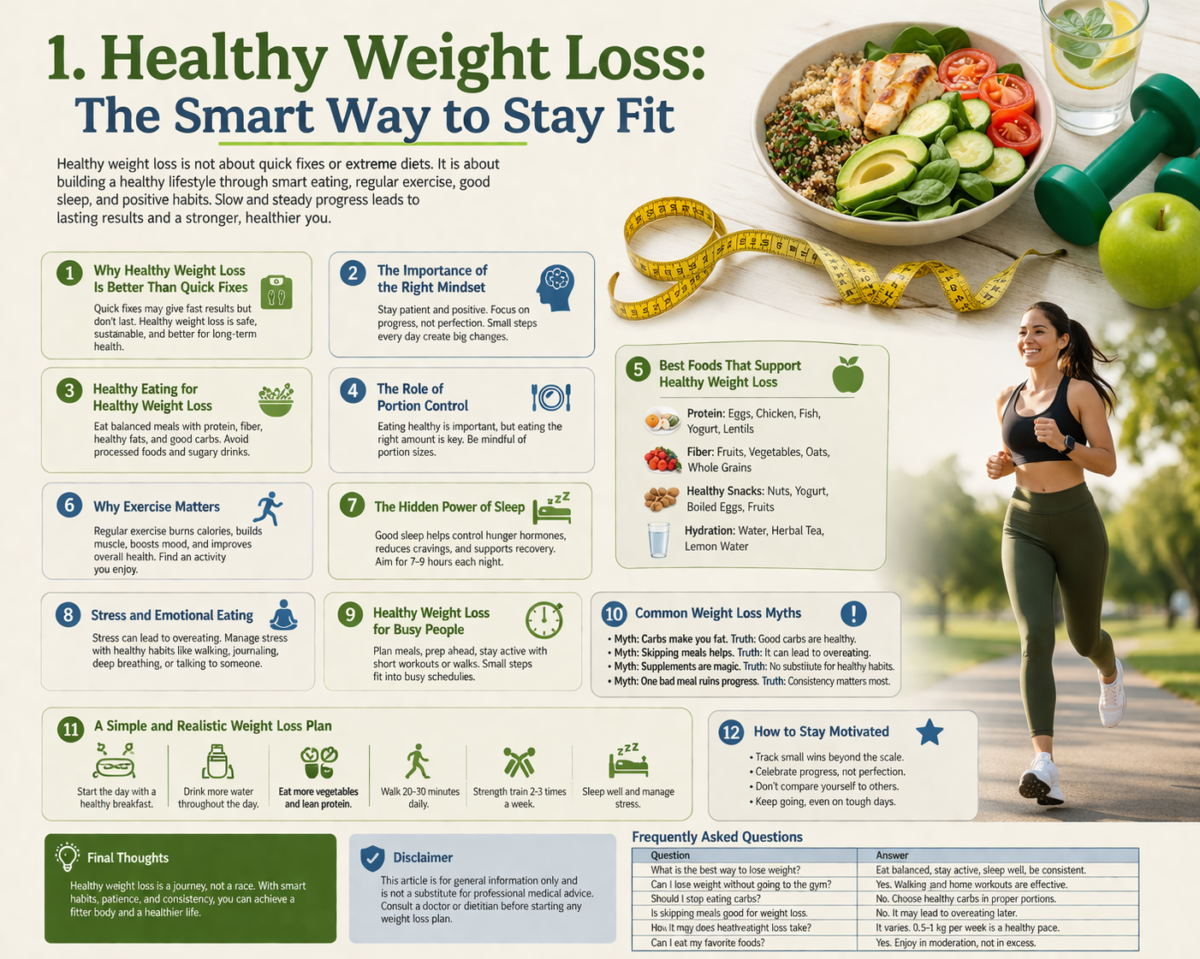
1. Healthy Weight Loss: The Smart Way to Stay Fit
For many people, losing weight becomes stressful because they focus only on appearance or the number on the scale. But true healthy weight loss is much more than that. It is about improving your energy, eating better, becoming stronger, sleeping well, and living a healthier lifestyle. When weight loss is done in the right way, it becomes easier to maintain and less damaging to your body and mind.
This article explains how to lose weight in a healthy and smart way. It covers nutrition, exercise, sleep, stress, and practical habits that can help you reach your goals without following dangerous or unrealistic trends.
2. Why Healthy Weight Loss Is Better Than Quick Fixes
Many people want instant results. They start a strict diet, cut out most of their food, and expect dramatic changes within a few days. When this does not happen, they become frustrated and often give up. This is one of the biggest reasons why many weight loss journeys fail.
Quick fixes may help you lose some weight for a short period of time, but they usually do not last. In many cases, people gain the weight back because the method they followed was too hard to continue. Extreme dieting can also lead to weakness, mood swings, low energy, and unhealthy cravings.
Healthy weight loss is better because it focuses on slow, steady, and realistic progress. It allows your body to adjust naturally and helps you create habits that you can continue for months or even years. Instead of looking for fast results, it is smarter to aim for lasting change. Slow progress is still progress, and in most cases, it leads to better long-term results.
3. The Importance of the Right Mindset
Before changing your meals or starting a workout plan, it is important to develop the right mindset. Many people begin their weight loss journey with pressure, guilt, or unrealistic expectations. They want to be perfect from the first day, and when they make one mistake, they think they have failed.
This way of thinking is harmful. Healthy weight loss begins when you understand that real change takes time. There will be good days and bad days. There may be days when you eat more than planned or skip a workout. That does not mean the journey is over. It simply means you need to continue with patience and discipline.
A positive mindset helps you stay focused. Instead of aiming for perfection, aim for progress. Set small and achievable goals. For example, you can decide to walk every day, eat more vegetables, or reduce sugary drinks. These small changes may seem simple, but they can lead to big improvements over time.
4. Healthy Eating for Healthy Weight Loss
Food plays a major role in weight loss, but healthy eating does not mean eating less all the time. It means eating the right foods in the right amounts. Many people think that losing weight means skipping meals or avoiding everything they enjoy. In reality, that approach usually leads to stress and overeating later.
A balanced diet should include protein, fiber, healthy fats, and good carbohydrates. Protein is important because it helps you feel full and supports your muscles. Good sources of protein include eggs, fish, chicken, yogurt, lentils, and beans. Fiber is also important because it improves digestion and keeps you full for longer. Fruits, vegetables, oats, and whole grains are all excellent sources of fiber.
Healthy fats, such as those found in nuts, seeds, olive oil, and avocado, are also useful in moderation. At the same time, it is important to reduce processed foods, sugary snacks, and soft drinks. These foods often contain too many calories and too little nutrition.
Healthy weight loss becomes easier when you focus on balance instead of restriction. You do not have to completely avoid your favorite foods, but you should enjoy them in moderation. This makes your eating plan more realistic and easier to follow.
5. The Role of Portion Control
Even healthy foods can cause weight gain if they are eaten in large amounts. That is why portion control is very important. Many people eat more than their body needs simply because they are distracted, eating too fast, or not paying attention to hunger and fullness.
Learning portion control does not mean you must count every calorie forever. It simply means becoming more aware of how much you eat. Eating slowly, using smaller plates, and avoiding unnecessary snacking can make a big difference. Drinking water before meals may also help you avoid overeating.
When you understand portion sizes, healthy weight loss becomes more manageable. You begin to enjoy food without losing control, and that balance is essential for long-term success.

6. Best Foods That Support Healthy Weight Loss
Some foods are especially helpful for people who want to lose weight in a healthy way. These foods support energy, reduce hunger, and provide important nutrients.
Protein-rich foods such as eggs, chicken, fish, yogurt, lentils, and tofu help control appetite and support muscle health. Fiber-rich foods such as apples, berries, carrots, cucumbers, broccoli, oats, and brown rice keep you full and improve digestion.
Low-calorie, high-volume foods like leafy greens, soups, salads, watermelon, and tomatoes can help you eat satisfying meals without consuming too many calories. Healthy snacks such as boiled eggs, fruit, yogurt, nuts, and roasted chickpeas are better choices than chips, biscuits, or sugary snacks.
Making smart food choices every day can strongly support healthy weight loss and improve your overall well-being.
7. Why Exercise Matters
Exercise is another important part of a healthy lifestyle. However, many people believe they must spend hours in the gym or do extremely hard workouts to lose weight. This is not true. The best exercise is the one you can do consistently.
Walking is one of the easiest and most effective activities for beginners. It helps burn calories, improves heart health, and reduces stress. Strength training is also important because it helps build muscle and improve body shape. You can start with simple exercises such as squats, lunges, push-ups, and planks at home.
Cardio activities like running, cycling, dancing, or swimming can also help. The key is to stay active regularly. You do not need a perfect workout plan. You need a realistic one. Healthy weight loss becomes more successful when movement becomes part of your daily routine.
8. The Hidden Power of Sleep
Sleep is often ignored during weight loss, but it plays a major role in your progress. When you do not sleep well, your body feels tired, your mood becomes unstable, and your cravings often increase. This can make it much harder to control your eating habits.
Lack of sleep can also affect hunger hormones, which may cause you to feel hungry even when your body does not truly need more food. That is why people who sleep poorly often struggle with overeating, especially sugary and high-calorie foods.
Getting enough rest supports recovery, improves focus, and helps your body function properly. Most adults should try to get seven to nine hours of sleep each night. If you want better results, remember that healthy weight loss is not only about diet and exercise. It is also about proper rest.
9. Stress and Emotional Eating
Stress is another major factor that affects body weight. Many people eat not because they are hungry, but because they are stressed, bored, sad, or tired. This is known as emotional eating, and it can slow down your progress.
The first step is to understand your eating habits. Ask yourself whether you are physically hungry or simply looking for comfort. Once you identify your triggers, you can try healthier alternatives such as walking, drinking water, writing in a journal, praying, stretching, or talking to someone you trust.
Managing emotions in a better way can improve both your mental health and your weight loss journey. Healthy weight loss becomes easier when food is not your only way of dealing with difficult emotions.
10. Healthy Weight Loss for Busy People
Many people believe they cannot lose weight because they are too busy. They have work, family responsibilities, and little free time. While life can certainly be busy, it is still possible to make healthy choices.
Meal preparation can save time and reduce poor food decisions. Cooking simple meals in advance can help you avoid fast food and unhealthy snacks. Keeping healthy foods available at home is also helpful.
Short workouts can also be effective. Even 15 to 20 minutes of walking or home exercise can make a difference when done regularly. Taking the stairs, moving more during the day, and staying active whenever possible can support healthy weight loss even with a busy schedule.
11. Common Weight Loss Myths
There are many myths about weight loss, and believing them can lead to frustration. One common myth is that you must completely avoid carbohydrates. In reality, healthy carbohydrates such as oats, fruits, vegetables, and whole grains can be part of a balanced diet.
Another myth is that skipping meals helps you lose weight faster. In many cases, skipping meals only makes you hungrier later, which can lead to overeating. Some people also believe that supplements and special products can burn fat quickly, but most of these products do not work as promised.
It is also wrong to think that one unhealthy meal will destroy all your progress. What matters most is your overall pattern, not one moment. Healthy weight loss is based on consistency, not perfection.
12. A Simple and Realistic Weight Loss Plan
A successful plan does not need to be complicated. In fact, the most effective plan is usually the one that feels easy enough to follow consistently.
You can begin your day with a healthy breakfast that includes protein. Drink enough water throughout the day. Try to include vegetables in your lunch and dinner. Reduce sugary drinks and limit highly processed foods. Walk regularly and include simple strength exercises two or three times a week. Sleep on time and try to manage stress in healthy ways.
These habits may sound basic, but they are powerful when repeated consistently. Healthy weight loss is built on small daily actions, not extreme measures.
13. How to Stay Motivated
Motivation does not stay the same every day. Some days you feel strong and focused, while other days you feel tired and discouraged. That is completely normal. The key is to continue even when motivation is low.
One good strategy is to track more than just body weight. Notice if your clothes fit better, if your energy has improved, if you are sleeping better, or if your mood feels more stable. These are also signs of progress.
Celebrate small achievements and be proud of your effort. Avoid comparing yourself with others because every person’s body and journey are different. Healthy weight loss becomes more meaningful when you focus on your own growth.
14. Final Thoughts
In the end, lasting results do not come from extreme diets, quick fixes, or unrealistic promises. They come from simple habits repeated over time. Healthy weight loss is not about punishing yourself. It is about taking care of your body with respect, balance, and consistency.
If you truly want to stay fit, focus on progress instead of perfection. Eat better, move regularly, sleep well, and be patient with yourself. Even small changes can create big results when they are continued for a long time.
A healthy body is built step by step. Stay committed, stay realistic, and remember that real success comes from making choices that support your body and your long-term well-being. That is the smartest way to stay fit.
15. Disclaimer
This article is for general informational purposes only. It is not intended to replace professional medical advice, diagnosis, or treatment. Every person has different health needs, body conditions, and fitness levels. Before starting any diet plan, workout routine, or weight loss program, it is best to consult a doctor, dietitian, or qualified healthcare professional.
16. Frequently Asked Questions
| Question | Answer |
|---|---|
| What is the best way to lose weight? | The best way is to follow a balanced diet, stay active, sleep well, and remain consistent. |
| Can I lose weight without going to the gym? | Yes. Walking, home workouts, and bodyweight exercises can also be effective. |
| Should I stop eating carbs completely? | No. Healthy carbohydrates can be part of a balanced diet when eaten in proper portions. |
| Is skipping meals a good idea? | No. Skipping meals can increase hunger and may lead to overeating later. |
| How long does healthy weight loss take? | It takes time and depends on your body, habits, and consistency. Slow progress is often healthier and more sustainable. |
| Can I still eat my favorite foods? | Yes. You can enjoy them in moderation as part of a balanced lifestyle. |
Bilkul — yeh 3 lines end ke liye use kar sakte hain:
Healthy weight loss is not about quick results, but about building a better lifestyle.
With balanced eating, regular exercise, and patience, anyone can achieve lasting fitness.
Stay consistent, believe in yourself, and choose healthy habits for a stronger future.

Muhammad Yaqoob is the founder of Global786Trend.com and a passionate health and wellness blogger. He writes about weight loss, healthy lifestyle, diet tips, and fitness. His goal is to provide simple, research-based information to help people improve their daily health habits naturally.