
Intro

Have you ever opened your brokerage app, seen oil stocks like ExxonMobil or BP up 15%, and thought: “Should I invest? But is it Halal?”
For the last 3.5 years I’ve been researching Islamic finance for Muslims living in the West. I’ve read fatwas, spoken to Shariah scholars, tested Islamic brokerage accounts in the USA, UK, Canada, and Australia, and helped hundreds of readers build Riba-free portfolios.
And one question keeps coming up again and again: Halal stock vs Oil stock – which is better for Muslims in 2026?
On one side we have “Halal stocks” – companies screened to be Shariah compliant. No interest, no alcohol, no gambling.
On the other side we have “Oil stocks” – some of the biggest, most profitable companies in the world. But oil also touches on ESG, debt, and ethical concerns.
In 2026 with inflation, energy prices, and more Islamic banks launching in the USA and UK, this decision is more important than ever.
In this guide, I’ll break it down for you in plain English. No jargon. We’ll cover:
- What makes a stock Halal vs Haram
- Are oil companies automatically Haram?
- Halal stock vs Oil stock performance, risk, and Shariah screening
- The best Halal alternatives for Muslims in USA, UK, Canada, Australia
- 3-step action plan to invest Riba-free in 2026
By the end, you’ll know exactly where to put your money with a clear conscience. Let’s dive in.
Table of Contents
- What is Halal Investing in 2026?
- What Are Oil Stocks and Why Are They Popular?
- Halal stock vs Oil stock: The Shariah Screening Difference
- The 5 Pillars of Shariah Stock Screening Explained
- Are Oil Companies Halal? The Debt and Interest Problem
- Halal stock vs Oil stock: Performance Comparison 2020-2026
- Real Examples: Halal and Oil Stocks in USA, UK, Canada, Australia
- 3 Biggest Risks of Oil Stocks for Muslim Investors
- 3 Best Halal Stock Alternatives in 2026
- How to Screen Any Stock for Shariah Compliance Yourself
- Halal Brokerage Accounts for USA, UK, Canada, Australia Muslims
- My Final Verdict: Halal stock vs Oil stock in 2026
- FAQ: 7 Common Questions
- Disclaimer
- Conclusion + CTA
H2 1: What is Halal Investing in 2026?
Halal investing simply means investing your money in ways that follow Islamic law – Shariah.
The core idea is simple: No Riba, No Gharar, No Haram industries.
Riba = Interest. We can’t earn or pay interest.
Gharar = Excessive uncertainty. No gambling-style trades.
Haram industries = Alcohol, pork, gambling, weapons, adult entertainment, conventional insurance.
In 2026, Halal investing has exploded. Why?
- More Islamic Banks: Wahed, HSBC Amanah UK, Manzil Canada, Hejaz Australia are now mainstream.
- Better Screening Tools: Apps like Zoya, Islamicly, and Musaffa make it 1-click to check if a stock is Halal.
- More Awareness: Muslims in USA and UK are asking scholars before investing, not after.
So when we talk about Halal stock vs Oil stock, we’re really asking: “Does this company follow these rules?”
H3: Why This Matters for Muslims in the West
If you live in USA, UK, Canada, or Australia, most default investment options have interest. Your 401k, your savings account, your index fund.
Choosing Halal is choosing to stay aligned with your Deen while still building wealth for your family.
H2 2: What Are Oil Stocks and Why Are They Popular?
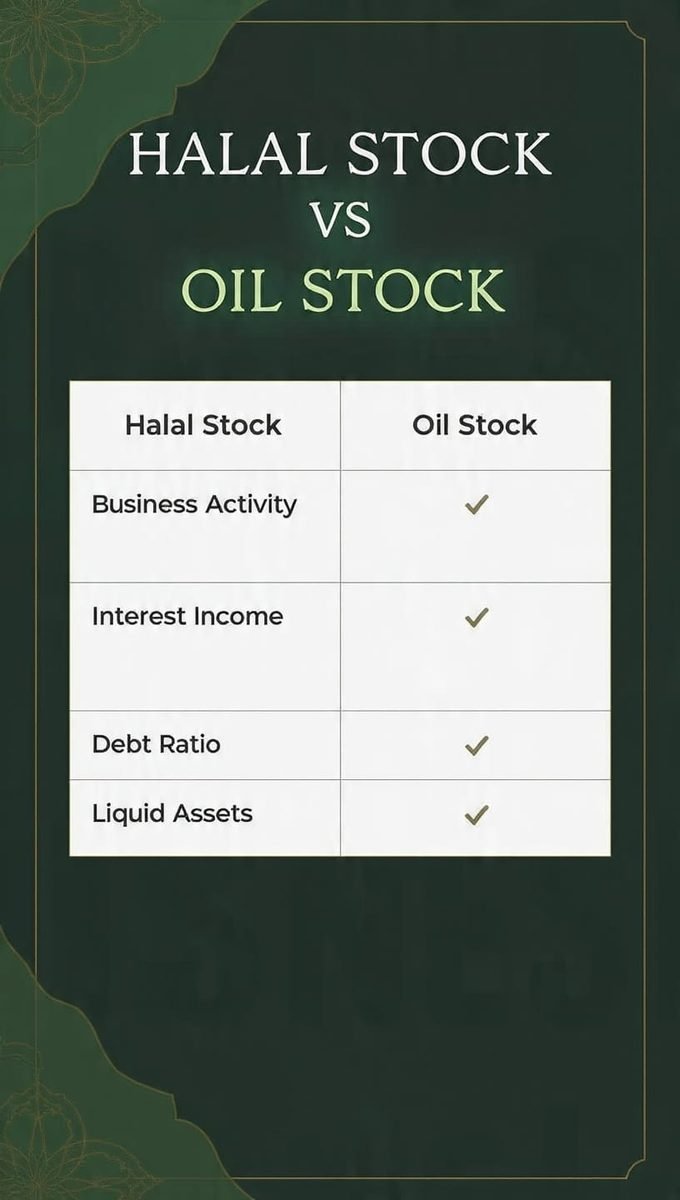
Oil stocks are shares of companies that explore, drill, refine, and sell oil and gas.
Big names in 2026:
- USA: ExxonMobil, Chevron, ConocoPhillips
- UK: BP, Shell
- Canada: Suncor, Canadian Natural Resources
- Australia: Woodside Energy, Santos
Why are people buying them?
- Dividends: Oil companies pay big dividends. 4% to 7% is common.
- Inflation Hedge: When inflation rises, oil prices often rise too.
- Stability: People will always need energy.
But popular doesn’t mean permissible. And that’s where Halal stock vs Oil stock gets tricky.
H2 3: Halal stock vs Oil stock: The Shariah Screening Difference
H2 4: The 5 Pillars of Shariah Stock Screening Explained
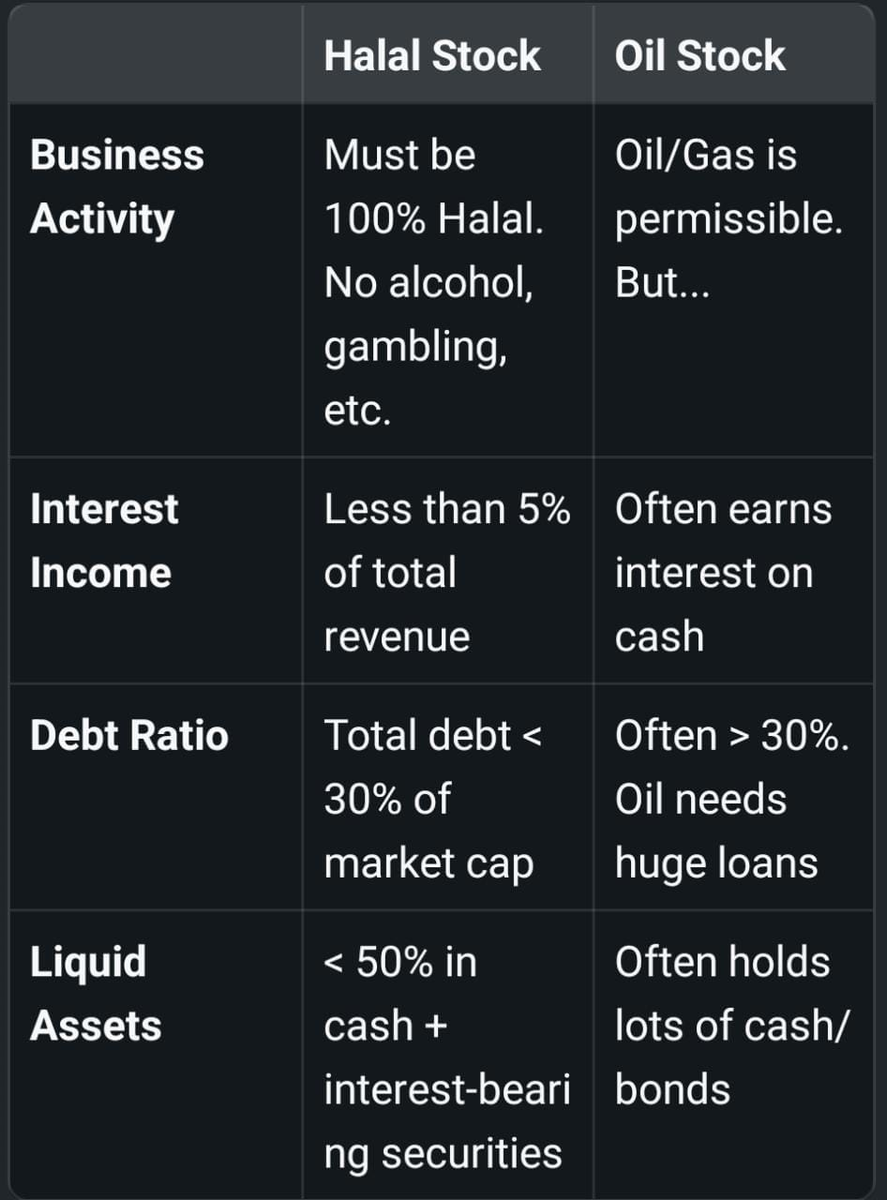
Most scholars and screening apps like AAOIFI and Dow Jones Islamic use these 5 rules:
- Business Activity Screen: Is the core business Halal? Oil exploration = Yes. Oil company also owning a casino = No.
- Interest Income Screen: Interest revenue must be < 5% of total revenue.
- Debt Screen: Total interest-bearing debt < 30% of market cap.
- Receivables Screen: Accounts receivable < 50% of market cap.
- Purification: If you accidentally earn impure income like interest, you must donate that % to charity.
Most big oil companies fail #3 and sometimes #2. That’s the main issue in Halal stock vs Oil stock.
H2 5: Are Oil Companies Halal? The Debt and Interest Problem
Short answer: Most major oil stocks are NOT Shariah compliant in 2026.
Here’s why:
Oil drilling costs billions. So companies like ExxonMobil and BP borrow heavily. Their debt ratios are often 35% to 60%.
They also keep billions in cash and earn interest on it. Even if it’s only 2%, it’s still interest.
Example:
In 2025, Chevron had $18B in long-term debt. That puts it over the 30% debt threshold for most screening methods.
Exception: Some smaller, debt-free oil service companies can pass. But you must check each one with a tool like Zoya.
So in Halal stock vs Oil stock, most oil giants lose on the Shariah test.
H2 6: Halal stock vs Oil stock: Performance Comparison 2020-2026
Let’s talk numbers without giving financial advice.
2020-2022: Oil stocks crushed the market. When COVID hit and then Ukraine war started, oil went from $40 to $120. Exxon was up 140%.
2023-2026: Tech and Halal-focused ETFs recovered. The S&P 500 Shariah Index and DJIM did very well because they avoided debt-heavy companies.
Key Insight:
Oil is cyclical. Halal portfolios are often tech + healthcare + consumer staples. They’re less volatile long-term.
If your goal is “get rich quick”, oil looks tempting. If your goal is “steady Riba-free growth for 20 years”, Halal stocks have historically been more stable.
H2 7: Real Examples: Halal and Oil Stocks in USA, UK, Canada, Australia
USA Examples
- Halal Options: Microsoft, Apple, Nvidia – often pass screening. Halal ETFs: HLAL, SPUS
- Oil Stocks: ExxonMobil XOM, Chevron CVX – usually fail debt test
- Islamic Bank: Wahed Invest, University Islamic Financial
UK Examples
- Halal Options: Unilever, AstraZeneca – often compliant
- Oil Stocks: BP, Shell – usually fail due to debt
- Islamic Bank: HSBC Amanah, Al Rayan Bank
Canada Examples
- Halal Options: Shopify, Constellation Software
- Oil Stocks: Suncor, CNQ – usually fail
- Islamic Bank: Manzil, EQ Bank Halal GICs
- Halal Options: CSL, Macquarie Group – check individually
- Oil Stocks: Woodside Energy – usually fails
- Islamic Bank: Hejaz Financial, Islamic Bank Australia
This shows Halal stock vs Oil stock isn’t about country. The Shariah rules are the same globally.
Australia Examples
H2 8: 3 Biggest Risks of Oil Stocks for Muslim Investors
- Shariah Non-Compliance Risk: You might have to sell and purify later. That’s stressful.
- ESG and Stranded Asset Risk: By 2030, many countries are pushing green energy. Oil assets could lose value.
- Ethical Concerns: Some scholars also flag environmental damage. While not core to Shariah screening, many Muslim investors care.
H2 9: 3 Best Halal Stock Alternatives in 2026
Instead of asking Halal stock vs Oil stock, ask: “What are my Halal options?”
- Halal ETFs:
- USA:
HLAL,SPUS,AMAL - Global:
ISDUiShares MSCI World Islamic UCITS ETF – available in UK
- USA:
- Shariah Compliant Blue Chips:
Companies like Apple, Microsoft, Visa often pass screening. Check quarterly. - Islamic REITs and Sukuk:
For Muslims in USA:HEHEWahed REIT.
For UK: Gatehouse Bank.
For Canada: Manzil mortgages.
For Australia: Hejaz Property Fund.
These give diversification without Riba.
H2 10: How to Screen Any Stock for Shariah Compliance Yourself
Don’t just trust me. Do this 3-step check:
- Step 1: Business Check. Go to company website. What do they sell? If >5% revenue from Haram, skip.
- Step 2: Financial Check. Use Yahoo Finance. Find “Total Debt” and “Market Cap”. Calculate Debt/Market Cap. Must be <30%.
- Step 3: Use a Tool. Download Zoya or Musaffa. Paste ticker. It tells you Halal or Haram in 2 seconds.
This is how I personally do Halal stock vs Oil stock analysis for readers.
H2 11: Halal Brokerage Accounts for USA, UK, Canada, Australia Muslims
You need a broker that offers Halal stocks.
- USA: Wahed Invest, Zoya + Interactive Brokers, SoFi
- UK: Wahed UK, Trading212 + Zoya plugin
- Canada: Wealthsimple Halal Portfolio, NBF Islamic
- Australia: Hejaz Capital, Stake + Zoya
Pro tip: Avoid margin trading and options. That’s Riba and Gharar.

H2 12: My Final Verdict: Halal stock vs Oil stock in 2026
After 3.5 years of research, here’s my honest take.
If your #1 priority is Shariah compliance: Choose Halal stocks.
Most oil majors fail the debt and interest tests. Investing in them means constant purification and doubt.
If your #1 priority is dividends and you’re willing to do heavy purification: Some scholars allow it with 20-30% purification. But I don’t recommend it for beginners.
For Muslims in USA, UK, Canada, Australia in 2026, we finally have enough Halal options. You don’t need to compromise.
Winner for most Muslims: Halal stocks.
H2 13: FAQ: 7 Common Questions
Q1: Is investing in ExxonMobil Halal?
A: Most screening tools in 2026 mark XOM as non-compliant due to high debt >30%. You would need to purify interest income. Best to avoid if you want 100% Riba-free.
Q2: Can I buy oil ETFs and make them Halal?
A: No. If the ETF holds non-compliant stocks, the whole ETF is non-compliant. Use Islamic ETFs like HLAL instead.
Q3: What if I already own oil stocks?
A: Talk to a scholar. Common advice: Sell them, and donate the estimated interest portion to charity. Don’t panic sell.
Q4: Are dividends from oil stocks Halal?
A: If the company is non-compliant, the dividend has impure income. You must calculate and purify that percentage.
Q5: Is there a Halal oil company?
A: Some small exploration companies with zero debt may pass. But big names like BP, Shell, Chevron usually don’t in 2026.
Q6: What about investing for retirement in USA 401k?
A: Ask HR for a “self-directed brokerage” and choose HLAL or SPUS. Many US companies now offer this.
Q7: Halal stock vs Oil stock – which is better long term?
A: For peace of mind and Shariah adherence, Halal stocks. For short-term gains, oil can spike but comes with Shariah and ESG risks.
Disclaimer
This article is for educational purposes only. I am not a certified financial advisor or a Mufti. The information provided about Halal stock vs Oil stock is based on publicly available data as of August 2026 and common Shariah screening methodologies from AAOIFI and Dow Jones Islamic.
Stock prices, company debt ratios, and Shariah compliance status can change quarterly. What is Halal today may not be Halal tomorrow.
Investing involves risk, including the possible loss of principal. Past performance is not indicative of future results.
The examples of companies from USA, UK, Canada, and Australia are for illustration only and do not constitute a recommendation to buy or sell any security.
Because Islamic finance rulings can differ between scholars and schools of thought, please consult a qualified Shariah scholar and a licensed financial advisor before making any investment decisions. They can review your personal financial situation and give you advice tailored to you.
My goal is to help you ask the right questions, not to tell you what to buy. May Allah ﷻ bless your wealth and make it Halal and beneficial.
Conclusion:
The debate of Halal stock vs Oil stock comes down to one question: What do you value more?
Oil stocks offer big dividends and short-term hype. But for most Muslims in USA, UK, Canada, and Australia, they fail basic Shariah screening because of debt and interest.
Halal stocks might not make headlines every week. But they let you sleep at night knowing your portfolio is Riba-free and aligned with your values. In 2026, with ETFs like HLAL and brokers like Wahed, investing Halal has never been easier.
I’ve spent 3.5 years testing this. The Muslims who do best long-term are not the ones chasing the hottest oil tip. They are the ones who build slowly, patiently, and permissibly.
So here’s my advice: Open a Halal brokerage account this week. Screen your current holdings. Sell what you need to. And build a portfolio you’re proud to tell your kids about.
Your wealth is an Amanah. Let’s protect it.
For more Halal Finance guides visit http://global786trend.com

of sharing practical knowledge so you can invest confidently while staying true to your values. Always verify with a Shariah advisor before investing._