
Health and fitness Tips complete Guide for healthy
🥗 Nutrition Tips for Health: A Complete Guide to Eating Well and Living Better
Health and fitness Tips complete Guide for healthy
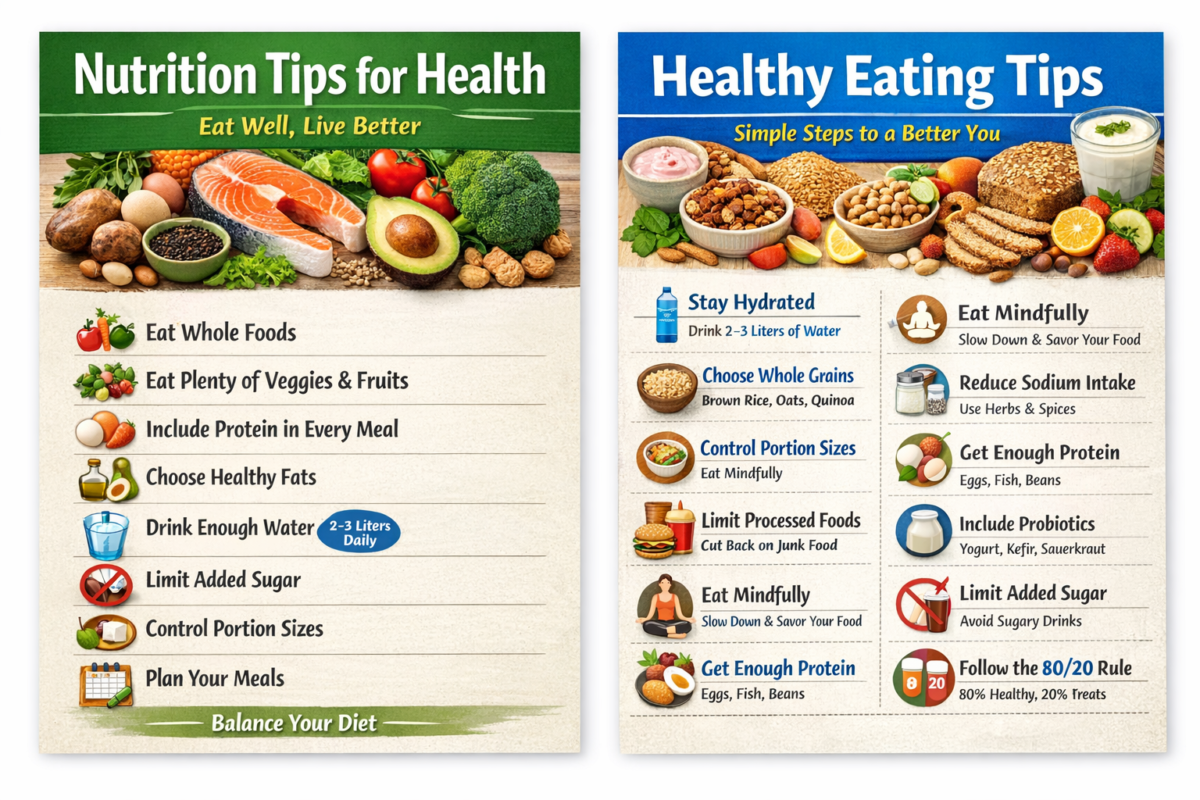
This guide provides practical, science-backed nutrition tips to help you build sustainable healthy eating habits.
Health1. Focus on Whole, Natural Foods
- Fresh vegetables and fruits
- Whole grains (brown rice, oats, quinoa)
- Lean proteins (chicken, fish, eggs, beans)
- Nuts and seeds
- Legumes
Whole foods are rich in vitamins, minerals, fiber, and antioxidants that protect your body from disease. Highly processed foods, on the other hand, often contain added sugars, unhealthy fats, artificial ingredients, and excess sodium.
A simple rule: If it comes in a package with a long ingredient list you can’t pronounce, limit it.
2. Eat Plenty http://health and fitness tips of Vegetables and Fruits
Vegetables and fruits are packed with essential nutrients and fiber. They support digestion, heart health, skin health, and immune function.
Aim for:
- At least 5 servings per day
- A variety of colors (green, red, yellow, purple, orange)
Different colors provide different nutrients:
- Green vegetables support detoxification and bone health
- Orange vegetables support eye health
- Berries support brain health
- Red fruits support heart health
Fresh is ideal, but frozen options are also nutritious and convenient.
Health and fitness Tips complete Guide for healthy
3. Prioritisation Protein in Every Meal
Protein is essential for muscle repair, immune function, hormone production, and satiety (feeling full). Eating enough protein helps maintain a healthy weight and prevents muscle loss.
Healthy protein sources include:
- Eggs
- Fish
- Lean meats
- Greek yogurt
- Beans and lentils
- Tofu and tempeh
Including protein in every meal stabilizes blood sugar and reduces cravings.
4. Choose Healthy Fats
Not all fats are bad. Healthy fats are essential for brain function, hormone balance, and nutrient absorption.
Good sources of healthy fats:
- Olive oil
- Avocados
- Nuts and seeds
- Fatty fish (salmon, sardines)
Avoid or limit:
- Trans fats
- Deep-fried foods
- Processed vegetable oils
Moderation is key, as fats are calorie-dense.
5. Stay Hydrated
Water is crucial for digestion, circulation, temperature regulation, and energy levels. Dehydration can cause fatigue, headaches, and poor concentration.
Tips to stay hydrated:
- Drink 2–3 liters of water daily
- Start your morning with a glass of water
- Carry a reusable water bottle
- Limit sugary drinks and sodas
Herbal teas and water-rich foods like cucumbers and watermelon also help hydration.
6. Limit Added Sugar
Excess sugar contributes to obesity, type 2 diabetes, heart disease, and inflammation. Many processed foods contain hidden sugars.
Common sources of added sugar:
- Soft drinks
- Packaged snacks
- Breakfast cereals
- Flavored yogurts
- Sauces and dressings
Try to:
- Read nutrition labels
- Choose unsweetened options
- Satisfy sweet cravings with fruit
Reducing sugar intake improves energy stability and reduces cravings.
7. Control Portion Sizes
Helpful tips:
- Use smaller plates
- Avoid eating directly from packages
- Eat slowly and mindfully
- Stop eating when you feel 80% full
Listening to your body’s hunger and fullness cues is essential.
8. Eat Whole Grains Instead of Refined Carbs
Refined carbohydrates (white bread, white rice, pastries) are stripped of fiber and nutrients. They digest quickly and can spike blood sugar.
Choose instead:
- Brown rice
- Whole wheat bread
- Oats
- Quinoa
- Barley
Whole grains provide fiber, which supports digestion and keeps you full longer.
Health and fitness Tips complete Guide for healthy
9. Don’t Skip Meals
Skipping meals may slow metabolism and lead to overeating later. Regular meals help stabilize blood sugar and maintain energy.
Aim for:
- 3 balanced meals daily
- Optional healthy snacks if needed
Each meal should include:
- Protein
- Healthy fat
- Fiber (vegetables or whole grains)
Balanced meals prevent energy crashes.
10. Reduce Sodium Intake
High sodium intake increases blood pressure and raises the risk of heart disease.
To reduce sodium:
- Limit processed and packaged foods
- Avoid adding extra salt to meals
- Use herbs and spices for flavor
- Choose low-sodium options
Cooking at home gives you better control over salt levels.
11. Practice Mindful Eating
Mindful eating means paying attention to what and how you eat. It helps prevent overeating and improves digestion.
Practice by:
- Eating without distractions (no phone or TV)
- Chewing thoroughly
- Eating slowly
- Appreciating flavors and textures
Mindfulness strengthens your relationship with food.
12. Plan Your Meals
Meal planning prevents unhealthy last-minute choices. When you prepare meals in advance, you’re more likely to stick to healthy habits.
Steps for meal planning:
- Plan weekly meals
- Make a grocery list
- Prep vegetables in advance
- Cook larger portions for leftovers
Preparation reduces stress and improves consistency.
13. Support Gut Health
A healthy gut improves digestion, immunity, and even mental health.
Support gut health by:
- Eating fiber-rich foods
- Including fermented foods (yogurt, kefir, kimchi)
- Drinking enough water
- Reducing processed foods
A balanced gut microbiome is key to overall health.
14. Balance, Not Perfection
Healthy nutrition is about consistency, not perfection. You don’t need to eliminate your favorite foods completely.
Follow the 80/20 rule:
- 80% whole, nutritious foods
- 20% flexibility for enjoyment
This approach makes healthy eating sustainable long-term.
15. Make Sustainable Changes
Crash diets and extreme restrictions rarely work long-term. Instead:
- Make small changes gradually
- Replace unhealthy habits step by step
- Focus on long-term lifestyle improvement
Sustainable habits create lasting results.
Disclaimer:
This content is for general information only and does not replace medical advice. Please consult a healthcare professional for personal guidance.
Final Thoughts
Good nutrition is not about strict rules or temporary diets — it’s about building a healthy relationship with food. By focusing on whole foods, balanced meals, hydration, portion control, and mindful eating, you can significantly improve your health and well-being.
Remember: your body reflects what you consistently feed it. Nourish it with quality food, and it will reward you with energy, strength, and vitality.
Healthy eating is one of the most powerful investments you can make in your future.
health and fitness tips for beginners
THE END of this article

Muhammad Yaqoob is the founder of Global786Trend.com and a passionate health and wellness blogger. He writes about weight loss, healthy lifestyle, diet tips, and fitness. His goal is to provide simple, research-based information to help people improve their daily health habits naturally.
Pingback: Why Am I Always Hungry Even After Eating? 12 Real Reasons + Easy Fixes