
What Causes Obesity and How to Prevent It
What Causes Obesity
Obesity has become one of the most common health problems in the modern world. Millions of people across the globe are struggling with excess body weight due to changing lifestyles, unhealthy eating habits, and lack of physical activity. According to health experts, obesity is not just about appearance; it is a serious medical condition that can increase the risk of diseases such as diabetes, heart disease, high blood pressure, and certain cancers.
Understanding the causes of obesity and learning effective ways to prevent it is essential for living a healthy and balanced life. In this article, we will explore the major causes of obesity, its effects on health, and practical solutions that can help people maintain a healthy weight.
What Causes Obesity
Understanding Obesity
Obesity occurs when a person has an excessive amount of body fat that negatively affects health. It usually happens when a person consumes more calories than the body burns over time.
The Body Mass Index (BMI) is commonly used to determine whether a person is overweight or obese. A BMI of 30 or higher is generally considered obese.
Obesity has become a global issue due to urban lifestyles, increased consumption of processed foods, and reduced physical activity. It affects people of all ages, including children and teenagers.
What Causes Obesity
Major Causes of Obesity
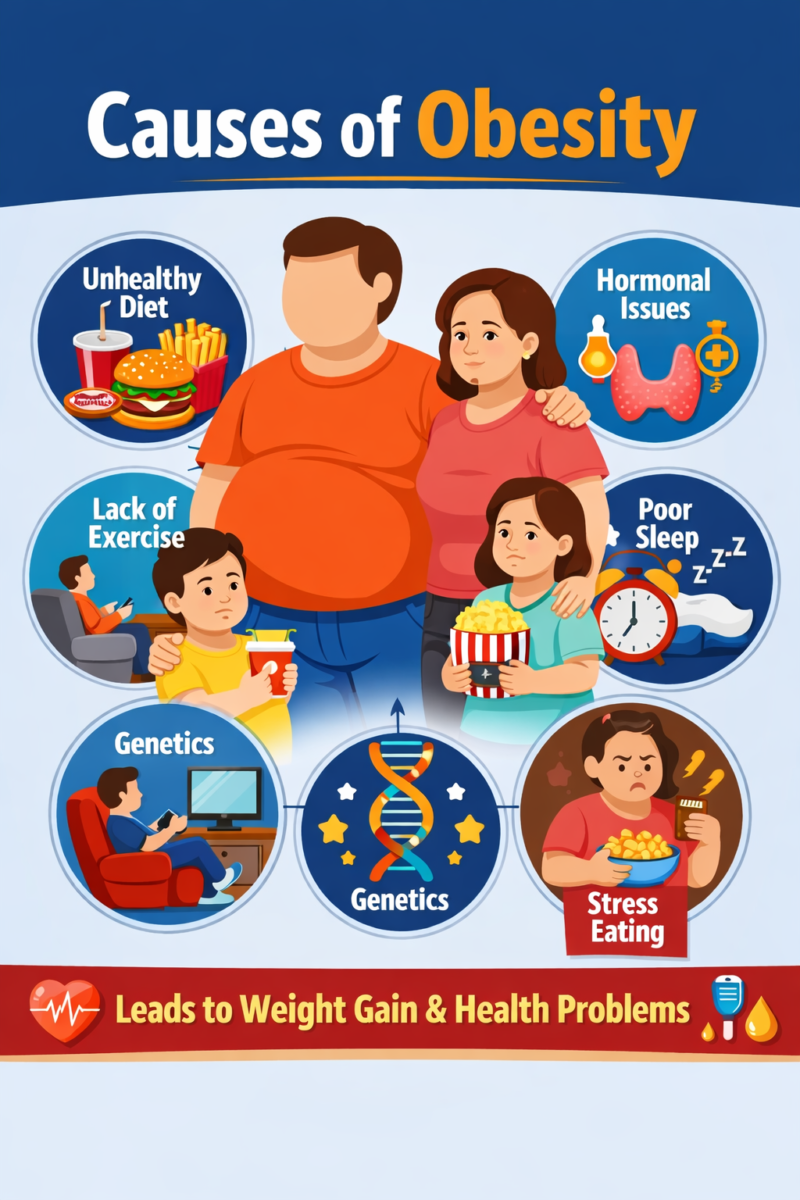
Several factors contribute to obesity. Understanding these causes can help people take the right steps to prevent it.
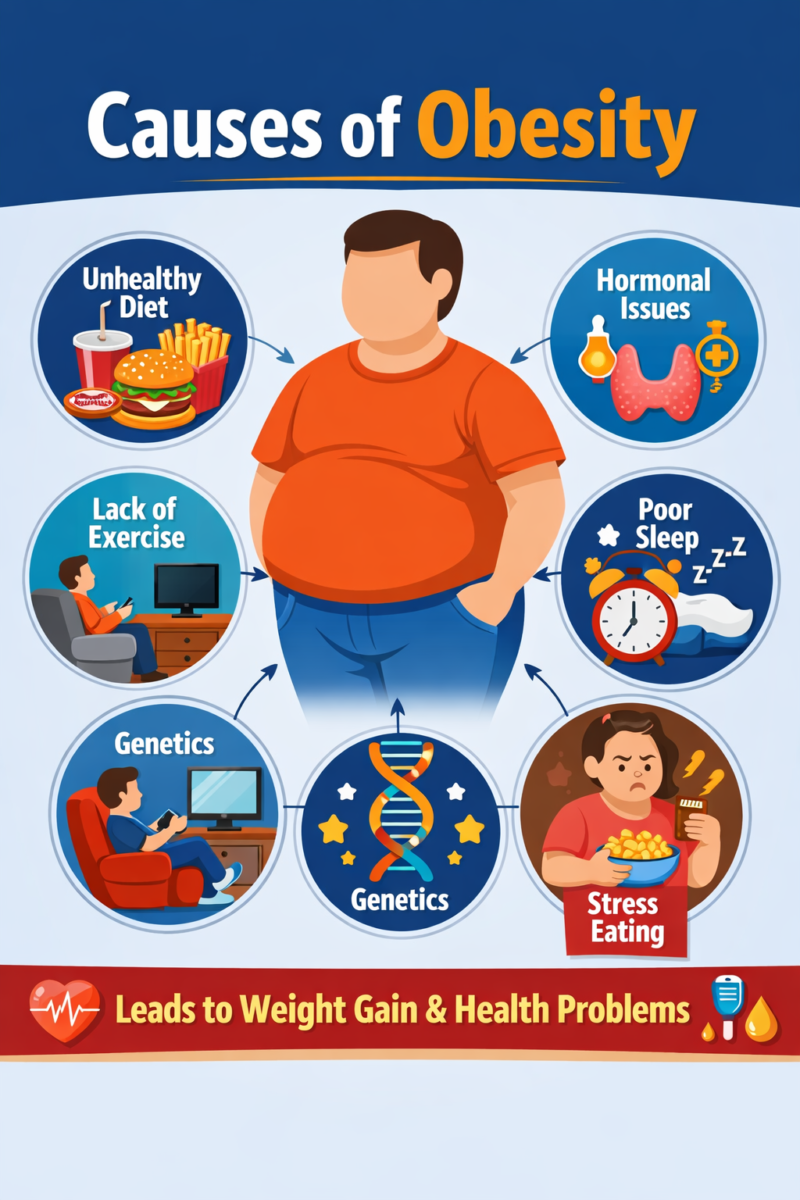
1. Unhealthy Diet
One of the biggest causes of obesity is an unhealthy diet. Many people consume large amounts of high-calorie foods such as fast food, sugary drinks, fried snacks, and processed meals.
These foods contain excessive fats, sugars, and calories that lead to weight gain. When the body receives more calories than it needs, the extra energy is stored as fat.
2. Lack of Physical Activity
Modern lifestyles have reduced physical movement. Many people spend hours sitting at desks, using computers, watching television, or using mobile phones.
When the body does not burn enough calories through physical activity, weight gain becomes more likely.
3. Genetic Factors
Genetics also play a role in obesity. If obesity runs in a family, individuals may have a higher chance of gaining weight easily.
However, genetics alone does not cause obesity. Lifestyle choices such as diet and exercise still play a significant role.
4. Hormonal Imbalances
Certain medical conditions and hormonal imbalances can contribute to weight gain. Conditions such as hypothyroidism, polycystic ovary syndrome (PCOS), and insulin resistance may increase the risk of obesity.
5. Poor Sleep Habits
Lack of sleep can affect hormones that control hunger and appetite. People who do not get enough sleep may feel hungrier and tend to eat more unhealthy foods.
6. Stress and Emotional Eating
Stress can cause people to overeat or consume comfort foods that are high in sugar and fat. Emotional eating often leads to increased calorie intake and weight gain.
What Causes Obesity
http://WHO.INTHealth Risks Associated with Obesity
Obesity can increase the risk of several serious health conditions.
Some of the most common health problems linked to obesity include:
- Heart disease
- Type 2 diabetes
- High blood pressure
- Stroke
- Joint problems
- Sleep apnea
- Certain types of cancer
Because of these risks, preventing obesity is essential for long-term health.
How to Prevent Obesity
Preventing obesity requires a combination of healthy eating habits, regular physical activity, and lifestyle improvements.
1. Follow a Balanced Diet
Eating a balanced diet is one of the most effective ways to prevent obesity.
A healthy diet should include:
- Fruits and vegetables
- Whole grains
- Lean proteins
- Healthy fats
Reducing the intake of processed foods, sugary beverages, and fried snacks can help control calorie consumption.
2. Exercise Regularly
Regular physical activity helps burn calories and maintain a healthy weight.
Experts recommend at least 30–60 minutes of exercise daily. Activities such as walking, jogging, cycling, swimming, or playing sports can improve overall health.
3. Drink More Water
Drinking enough water can help control hunger and improve metabolism. Sometimes people confuse thirst with hunger, which leads to unnecessary eating.
4. Get Enough Sleep
Adequate sleep is important for maintaining a healthy metabolism. Adults should aim for 7–9 hours of sleep per night.
5. Manage Stress
Managing stress through meditation, exercise, prayer, or relaxation techniques can prevent emotional eating.
6. Practice Portion Control
Eating smaller portions can prevent overeating. Using smaller plates and eating slowly can help people feel full with less food.
What Causes Obesity
Healthy Lifestyle Tips to Control Weight
Adopting small lifestyle changes can make a big difference in preventing obesity.
Some helpful tips include:
- Avoid sugary drinks and soda
- Choose home-cooked meals over fast food
- Stay physically active throughout the day
- Limit screen time
- Eat slowly and mindfully
- Plan healthy meals in advance
Consistency in these habits can help people maintain a healthy weight.
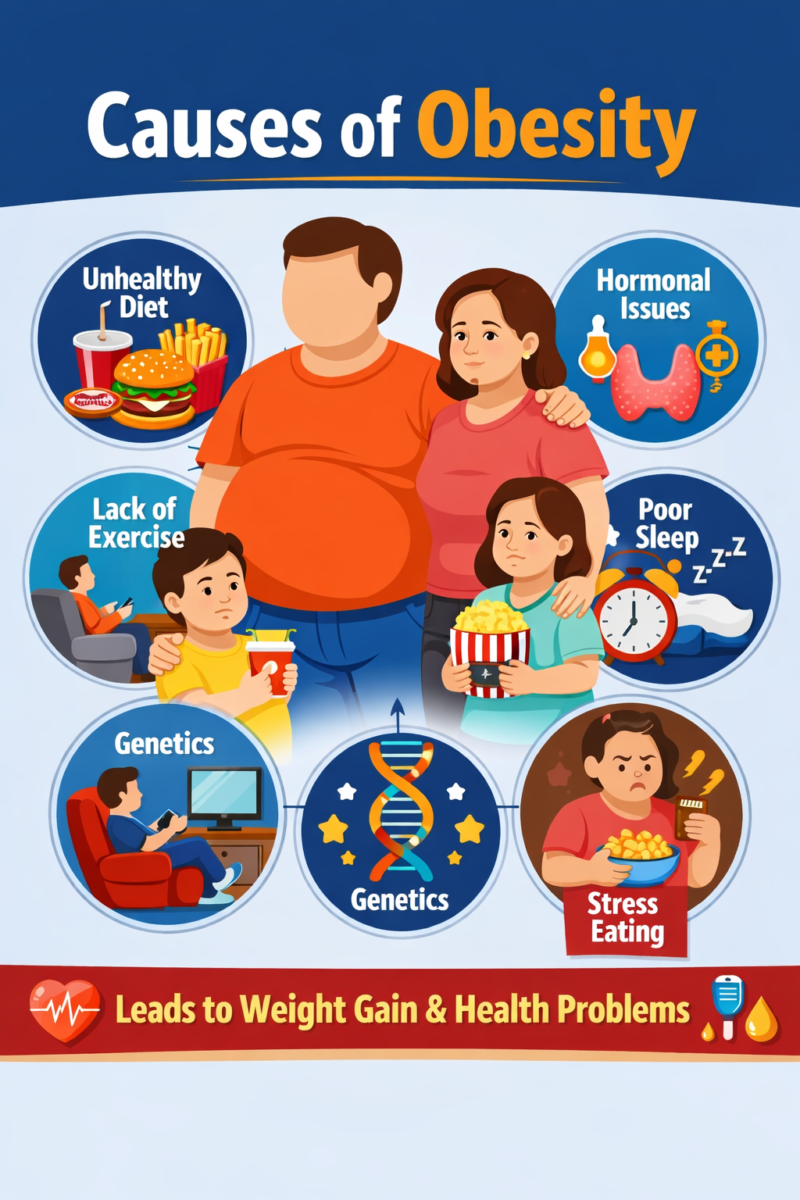
Table: Healthy vs Unhealthy Habits
| Healthy Habits | Unhealthy Habits |
|---|---|
| Eating fruits and vegetables | Eating junk food frequently |
| Drinking water | Drinking sugary beverages |
| Exercising regularly | Sitting for long hours |
| Getting enough sleep | Staying up late regularly |
| Managing stress | Emotional overeating |
What Causes Obesity
Frequently Asked Questions (FAQs)
1. What is the main cause of obesity?
The main cause of obesity is consuming more calories than the body burns through daily activities and exercise.
2. Can obesity be prevented?
Yes, obesity can often be prevented by maintaining a healthy diet, exercising regularly, and following a balanced lifestyle.
3. How much exercise is needed to prevent obesity?
Health experts recommend at least 30 minutes of moderate physical activity most days of the week.
4. Does genetics cause obesity?
Genetics can increase the risk of obesity, but lifestyle factors such as diet and physical activity play a much larger role.
5. Can drinking water help with weight loss?
Yes, drinking water can help control hunger, improve metabolism, and reduce calorie intake.
Final Thoughts
Obesity is a growing global health issue, but it is largely preventable with the right lifestyle choices. By understanding the causes of obesity and adopting healthier habits such as balanced eating, regular exercise, adequate sleep, and stress management, individuals can significantly reduce their risk of weight-related health problems.
Maintaining a healthy weight is not about quick fixes or extreme diets. Instead, it requires consistent effort, patience, and long-term commitment to a healthy lifestyle.
Disclaimer
This article is for informational and educational purposes only and should not be considered medical advice. Always consult a qualified healthcare professional or doctor before making significant changes to your diet, exercise routine, or health management plan.

Muhammad Yaqoob is the founder of Global786Trend.com and a passionate health and wellness blogger. He writes about weight loss, healthy lifestyle, diet tips, and fitness. His goal is to provide simple, research-based information to help people improve their daily health habits naturally.
Pingback: best 15 protein foods for weight loss Top 15 Best Protein Foods for Weight Loss