
Can’t Sleep at Night? 7 Reasons and Simple Solutions That Work
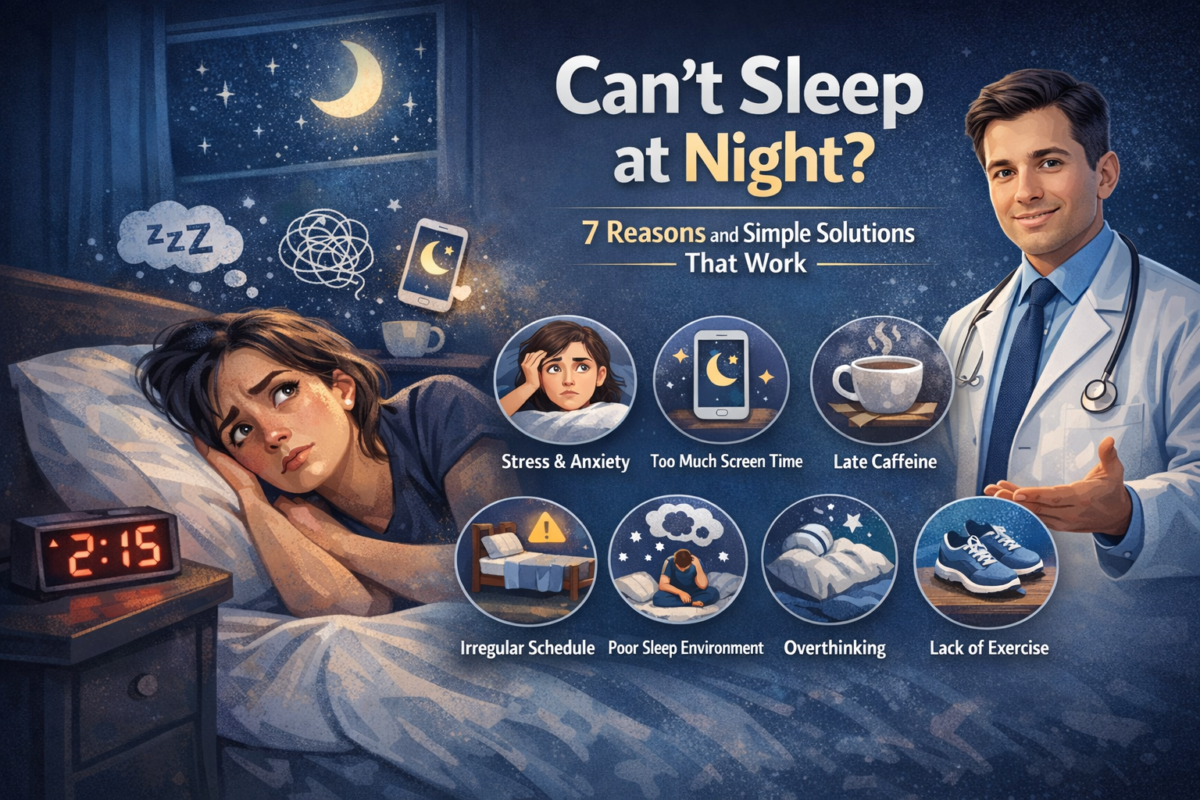
Can’t Sleep at Night Sleep is one of the most important parts of a healthy life. Yet millions of people around the world struggle with falling asleep at night. If you often lie in bed staring at the ceiling, wondering “Why can’t I sleep at night?”, you are not alone. Insomnia and sleep problems have become increasingly common in today’s fast-paced, digital world.
Lack of sleep does not only make you tired. It can affect your mental health, productivity, mood, immune system, and overall well-being. The good news is that many sleep problems have clear causes—and even better, there are practical solutions that actually work.
In this article, we will explore 7 common reasons why you can’t sleep at night and simple solutions that can help you sleep better naturally.Can’t Sleep at Night
Why Good Sleep Is Important for Your Health

Can’t Sleep at Night
Before discussing the causes of sleepless nights, it’s important to understand why sleep matters so much.
Quality sleep helps your body:
- Restore energy
- Repair muscles and tissues
- Strengthen the immune system
- Improve memory and focus
- Maintain emotional balance
According to health experts, adults should get 7–9 hours of sleep each night. When sleep is regularly interrupted, it can lead to serious problems such as:
- Anxiety and depression
- Weak immune system
- Poor concentration
- Heart disease risk
- Weight gain
If you struggle with sleep often, understanding the root cause is the first step to fixing the problem.
Reason 1: Stress and Anxiety Can’t Sleep at Night
One of the most common reasons people cannot sleep at night is stress. When your mind is full of worries—about work, finances, family, or personal problems—it becomes difficult to relax.
Your brain stays active, replaying thoughts and creating tension in your body. This prevents you from entering a deep sleep.
Signs Stress Is Affecting Your Sleep
- Racing thoughts at bedtime
- Difficulty relaxing
- Waking up frequently during the night
- Feeling mentally exhausted
Simple Solutions
Try these methods to calm your mind before sleep:
Practice relaxation techniques
Deep breathing, meditation, or mindfulness can reduce stress levels.
Write down your thoughts
Keeping a journal helps release worries before bed.
Create a bedtime routine
Reading, stretching, or listening to calm music can help your brain relax.
Can’t Sleep at Night
Reason 2: Too Much Screen Time
Modern technology has changed how we live—and how we sleep.
Using smartphones, laptops, or watching TV before bed exposes your eyes to blue light. This light interferes with melatonin, the hormone responsible for sleep.
When melatonin levels decrease, your brain thinks it is still daytime.
Common Screen Habits That Affect Sleep
- Scrolling social media in bed
- Watching TV late at night
- Gaming before bedtime
- Using the phone in the dark
Can’t Sleep at Night/Natural sleep solutions
Simple Solutions
Avoid screens at least 1 hour before bedtime.
Instead of using devices, try:
- Reading a book
- Listening to relaxing music
- Doing light stretching
If you must use devices, enable night mode or blue light filters.
Reason 3: Irregular Sleep Schedule
Your body follows a natural cycle called the circadian rhythm. This internal clock controls when you feel awake and when you feel sleepy.
When your sleep schedule changes frequently—sleeping late one day and early the next—it confuses your body clock.
Signs of an Irregular Sleep Cycle
- Difficulty falling asleep
- Feeling tired during the day
- Waking up at different times daily
- Weekend sleep changes
Simple Solutions
To reset your body clock:
- Go to bed at the same time every night
- Wake up at the same time every morning
- Avoid long daytime naps
- Spend time in natural sunlight during the day
Consistency is the key to better sleep.
Can’t Sleep at Night
Reason 4: Drinking Caffeine Late in the Day
Caffeine is a stimulant that keeps your brain alert. It is commonly found in:
- Coffee
- Tea
- Energy drinks
- Chocolate
- Soft drinks
While caffeine can boost energy during the day, consuming it late in the afternoon or evening can make it difficult to sleep.
How Long Does Caffeine Stay in the Body?
Caffeine can stay active in your system for 6 to 8 hours.
This means that even an afternoon coffee may affect your nighttime sleep.
Simple Solutions
- Avoid caffeine after 2–3 PM
- Drink herbal tea instead
- Choose decaffeinated drinks in the evening
Reducing caffeine intake can significantly improve sleep quality.
Reason 5: Poor Sleeping Environment
Your bedroom environment plays a major role in sleep quality.
If the room is noisy, too bright, too warm, or uncomfortable, your body cannot relax properly.
Common Sleep Environment Problems
- Bright lights
- Loud noises
- Uncomfortable mattress or pillows
- Room temperature too hot or too cold
Simple Solutions
Create a sleep-friendly environment by:
- Keeping the room dark and quiet
- Using comfortable bedding
- Maintaining a cool room temperature
- Using blackout curtains if needed
Your bedroom should be a place designed for rest and relaxation.
Reason 6: Lack of Physical Activity
Physical activity is essential for healthy sleep. WHealthhen your body does not move enough during the day, you may not feel tired at night.
Exercise helps regulate hormones and reduces stress, making it easier to fall asleep.
Signs You Need More Activity
- Feeling restless at night
- Low energy during the day
- Difficulty falling asleep
Simple Solutions
Include regular physical activity in your daily routine:
- Walking for 30 minutes
- Light stretching
- Yoga
- Cycling or swimming
However, avoid intense exercise right before bedtime.
Can’t Sleep at Night
Reason 7: Overthinking and Mental Overload
Sometimes the biggest obstacle to sleep is simply an overactive mind.
Many people experience a rush of thoughts when they finally lie down to sleep. Planning the next day, thinking about past mistakes, or imagining future worries can keep the brain alert.
Signs of Nighttime Overthinking
- Constant thoughts at bedtime
- Difficulty relaxing mentally
- Feeling tired but unable to sleep
Simple Solutions
To quiet your mind:
- Practice mindfulness meditation
- Listen to calming music or white noise
- Try guided sleep relaxation
- Focus on slow breathing
Training your mind to relax is an important skill for healthy sleep.
Natural Habits That Improve Sleep Quality
Besides fixing the common causes, certain healthy habits can dramatically improve sleep quality.
Can’t Sleep at Night
1. Create a Night Routine
Doing the same relaxing activities before bed signals your brain that it is time to sleep.
2. Eat Light at Night
Heavy meals late at night can disturb digestion and sleep.
3. Stay Hydrated
Drink enough water during the day, but avoid large amounts right before bed.
4. Get Sunlight During the Day
Exposure to natural daylight helps regulate your internal body clock.
5. Practice Gratitude
Ending the day with positive thoughts can reduce anxiety and improve sleep.
When to See a Doctor
Occasional sleepless nights are normal. However, if sleep problems continue for several weeks or months, it may be a sign of chronic insomnia.
Consider consulting a doctor if you experience:
- Difficulty sleeping for more than three weeks
- Severe daytime fatigue
- Mood changes or depression
- Loud snoring or breathing interruptions
A medical professional can help identify underlying conditions and recommend proper treatment.
Final Thoughts
Struggling to sleep at night is a common problem, but it is often caused by everyday habits that can be improved.Can’t Sleep at Night
By understanding the 7 common reasons for sleepless nights—stress, screen time, irregular schedules, caffeine, poor sleep environment, lack of activity, and overthinking—you can take simple steps to improve your sleep naturally.
Good sleep is not a luxury; it is essential for your physical health, mental clarity, and emotional well-being.
Start making small changes today. Create healthy bedtime habits, relax your mind, and give your body the rest it deserves.
A better night’s sleep can lead to a healthier, happier, and more productive life. 🌙😴
Disclaimer
The information provided in this article is for educational and informational purposes only and should not be considered medical advice. While we strive to provide accurate and up-to-date information, this content is not intended to replace professional medical consultation, diagnosis, or treatment.
If you are experiencing severe or persistent sleep problems, insomnia, or any health-related issues, please consult a qualified healthcare professional or doctor. Always seek the advice of your physician or other qualified health provider regarding any medical condition or concerns you may have.
The author and publisher are not responsible for any consequences resulting from the use of the information provided in this article.
Sleep Problems – Questions & Answers Table
| Question | Answer |
|---|---|
| Why can’t I sleep at night even when I’m tired? | This often happens due to stress, anxiety, excessive screen time, caffeine intake, or an irregular sleep schedule that disrupts the body’s natural sleep cycle. |
| What is the most common cause of insomnia? | Stress and anxiety are among the most common causes of insomnia because they keep the mind active and prevent relaxation. |
| How can I fall asleep faster naturally? | You can fall asleep faster by creating a bedtime routine, avoiding screens before bed, practicing relaxation techniques, and maintaining a consistent sleep schedule. |
| Does using a phone before bed affect sleep? | Yes, the blue light from phones and other devices can reduce melatonin production, making it harder for the body to fall asleep. |
| What drinks help improve sleep at night? | Herbal teas such as chamomile, warm milk, or caffeine-free drinks can help relax the body and promote better sleep. |
| How many hours of sleep do adults need? | Most adults need between 7 and 9 hours of sleep each night to maintain good physical and mental health. |
| When should I see a doctor for sleep problems? | If sleep problems last for several weeks or cause extreme fatigue, mood changes, or health issues, it is best to consult a healthcare professional. |
End of the article ,Can’t Sleep at Night

Muhammad Yaqoob is the founder of Global786Trend.com and a passionate health and wellness blogger. He writes about weight loss, healthy lifestyle, diet tips, and fitness. His goal is to provide simple, research-based information to help people improve their daily health habits naturally.