
Types of Heart Disease – A Complete Overvie
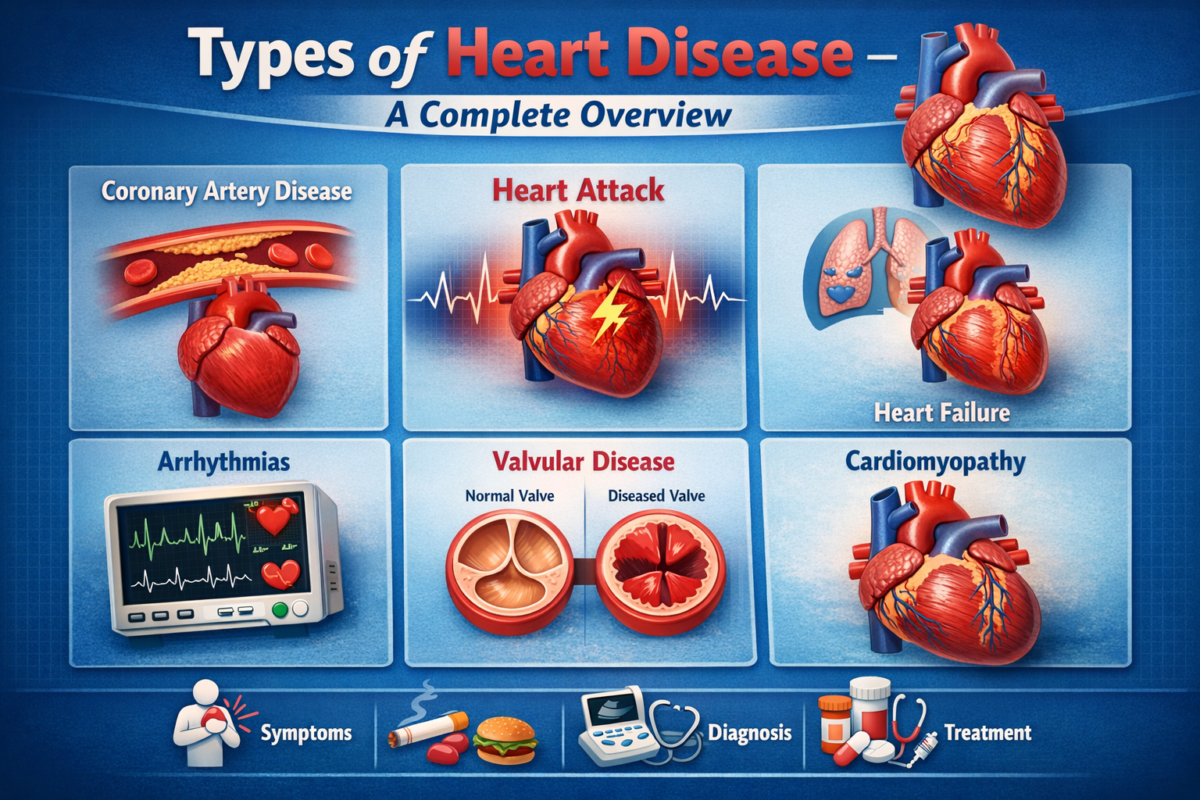
Types of Heart Disease – A Complete Overview Heart disease is a broad term used to describe various conditions that affect the heart’s structure and function. It includes problems such as coronary artery disease, heart attacks, heart failure, and irregular heartbeats. The main causes of heart disease are high blood pressure, high cholesterol, smoking, diabetes, obesity, and an unhealthy lifestyle. Early symptoms may include chest pain, shortness of breath, fatigue, and dizziness. Heart disease not only affects physical health but also impacts emotional well-being and family life. However, with proper medical care, healthy eating habits, regular exercise, stress management, and routine checkups, the risk of heart disease can be significantly reduced. Prevention and early diagnosis play a crucial role in maintaining long-term heart health.
Types of Heart Disease – A Complete Overview
Heart disease is a broad term used to describe several conditions that affect the structure and function of the heart. It remains one of the leading causes of illness and death worldwide. Understanding the different types of heart disease helps in early detection, proper treatment, and prevention. Below are the major types of heart disease explained in simple terms.
1. Coronary Artery Disease (CAD)
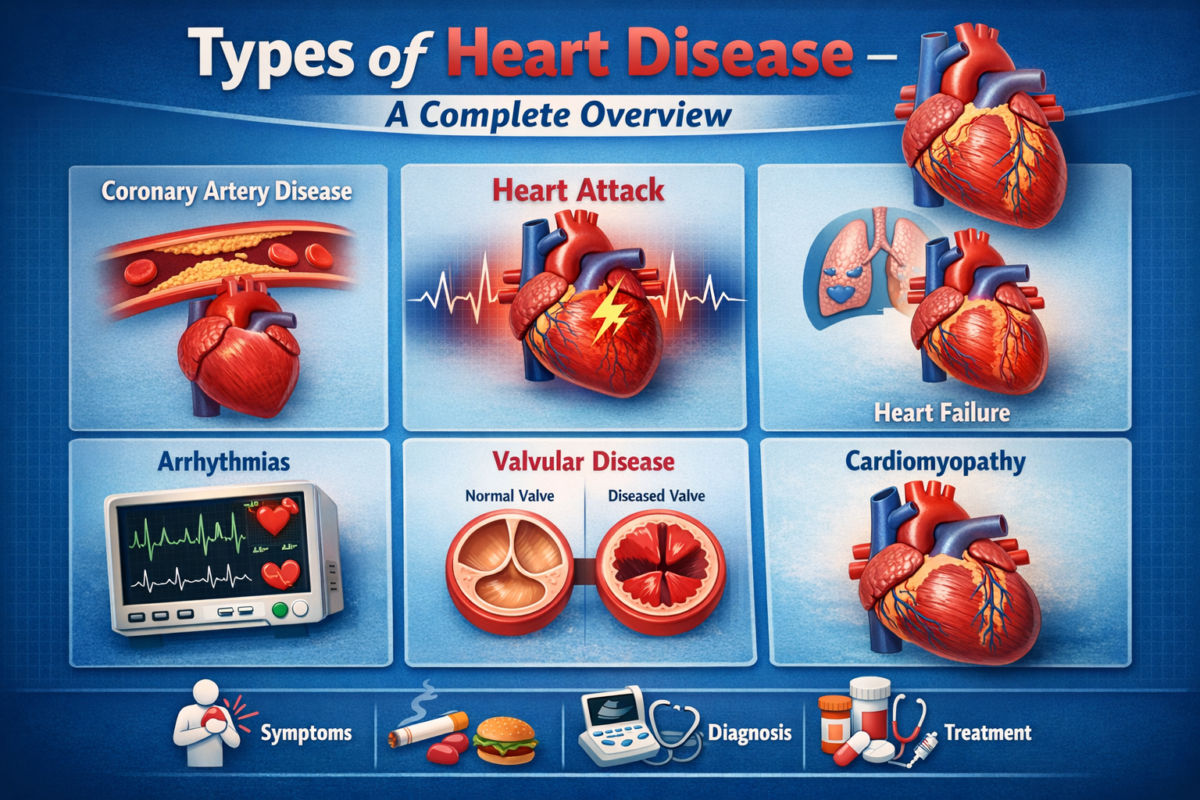
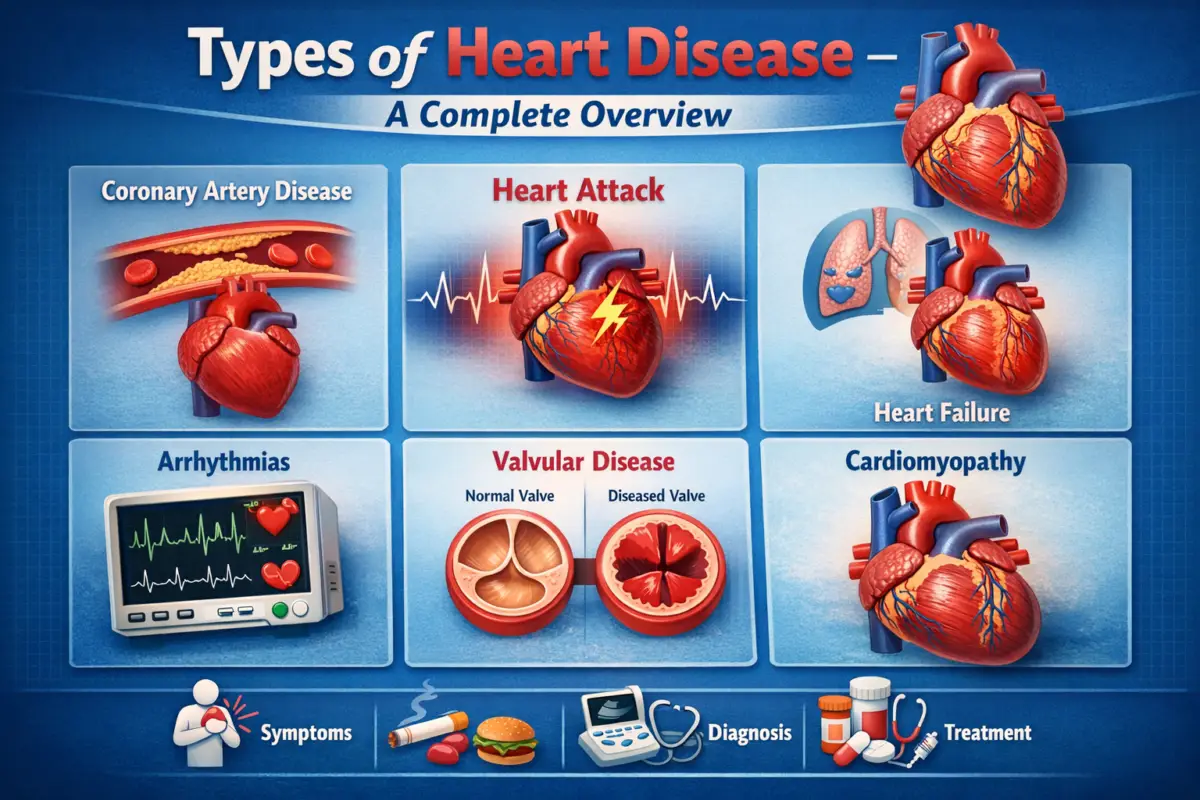
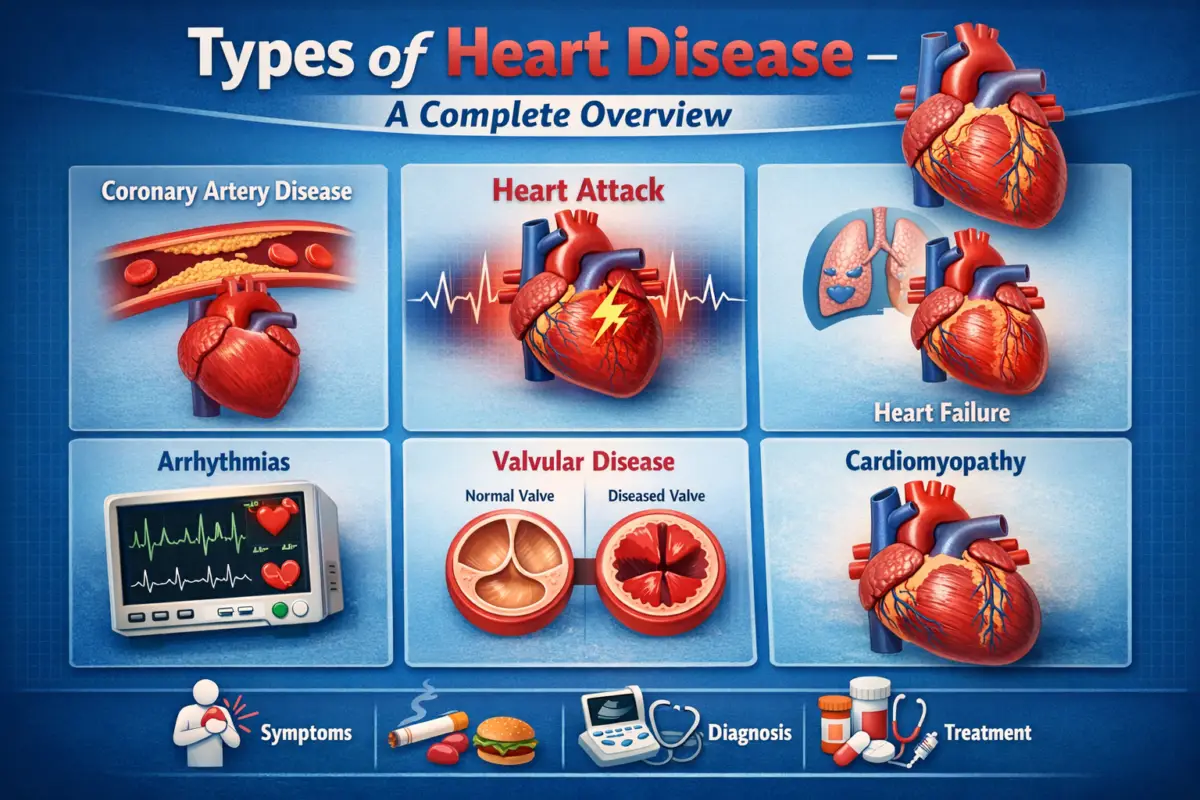
Coronary Artery Disease is the most common type of heart disease. It occurs when the coronary arteries, which supply oxygen-rich blood to the heart muscle, become narrowed or blocked due to plaque buildup (cholesterol and fatty deposits).
Key effects:
- Reduced blood flow to the heart
- Chest pain (angina)
- Increased risk of heart attack
2. Heart Arrhythmias
Heart arrhythmia are disorders of the heart’s rhythm. The heart may beat too fast, too slow, or irregularly due to problems in the heart’s electrical system.
Common symptoms:
- Palpitations
- Dizziness or fainting
- Shortness of breath
Some arrhythmia’s are harmless, while others can be life-threatening if left untreated.
3. Heart Valve DiseaseTypes of Heart Disease – A Complete Overview
This condition occurs when one or more heart valves do not open or close properly. Faulty valves can disrupt normal blood flow through the heart.
Types of valve problems:
Stenosis (narrowing of the valve)
- Regurgitation (leakage of blood backward)
Valve disease can be present from birth or develop over time due to infections or aging.
4. Heart Inflammation Heart inflammation can affect different layers of the heart and is often caused by infections, especially viruses or bacteria.
Types include:
- Myocardium (heart muscle inflammation)
- Endocarditis (inner lining inflammation)
- Pericarditis (outer covering inflammation)
It can weaken the heart and affect its ability to pump blood efficiently.
5. Cardiomyopathy (Heart Muscle Disease)
Cardiomyopathy is a disease of the heart muscle that makes it harder for the heart to pump blood.
Common form:
- Hypertrophy cardiomyopathy, where the heart muscle becomes abnormally thick
This condition may be genetic and can increase the risk of heart failure or sudden cardiac arrest.
6. Congenital Heart Diseasehealth and fitness
Congenital heart disease refers to structural defects in the heart that are present at birth. One common example is a ventricular septal defect, a hole between the lower chambers of the heart.
Effects:
- Abnormal blood flow
- Reduced oxygen supply to the body
Some defects are mild, while others require surgery.
7. Pericardial Disease
Pericardial disease affects the pericardium, the thin sac surrounding the heart. Fluid buildup in this sac can compress the heart and reduce its pumping ability.
Possible causes:
- Infections
- Injury
- Autoimmune conditions
8. Heart FailureTypes of Heart Disease – A Complete Overview
Heart failure does not mean the heart has stopped working. It means the heart cannot pump enough blood to meet the body’s needs. The heart may become enlarged and weak over time.
Common symptoms:
- Fatigue
- Swelling in legs and feet
- Shortness of breath
Conclusion
Heart disease includes a wide range of conditions, each with different causes and effects. Early diagnosis, a healthy lifestyle, regular medical checkups, and timely treatment play a crucial role in reducing complications. Awareness is the first step toward a healthier heart.
Muhammad Yaqoob is a passionate health and lifestyle content writer dedicated to spreading awareness about heart health, disease prevention, and healthy living. He shares informative and practical guides to help individuals and families improve their lifestyle and well-being.
Email: global786affiliate@gmail.com
🌐 Website: https://global786trend.com
It seems you mean “Disclaimer and Thoughts.” Here is a clear version you can use for your article “Types of Heart Disease – A Complete Overview.”
Disclaimer
This article is intended for educational and informational purposes only. It should not be considered medical advice, diagnosis, or treatment. Always consult a qualified healthcare professional or doctor if you have concerns about heart disease or experience symptoms such as chest pain, shortness of breath, or irregular heartbeat. The information provided here aims to increase awareness but should not replace professional medical guidance.
Thoughts
Heart disease remains one of the most serious health challenges worldwide, but many cases can be prevented through healthy lifestyle choices. Understanding the different types of heart disease helps people recognise symptoms early and seek timely medical care. Regular exercise, a balanced diet, avoiding smoking, and routine health checkups can significantly reduce the risk. Increasing awareness and education about heart health is an important step toward building healthier communities.
| Question | Answer |
|---|---|
| What is heart disease? | Heart disease refers to a group of conditions that affect the heart and blood vessels, including coronary artery disease, arrhythmias, and heart failure. |
| What is the most common type of heart disease? | The most common type is coronary artery disease (CAD), which occurs when plaque builds up in the coronary arteries. |
| What causes heart disease? | Common causes include high blood pressure, high cholesterol, smoking, diabetes, obesity, unhealthy diet, and lack of physical activity. |
| What are the common symptoms of heart disease? | Symptoms may include chest pain, shortness of breath, fatigue, dizziness, and irregular heartbeat. |
| What is arrhythmia? | Arrhythmia is a condition where the heart beats too fast, too slow, or irregularly. |
| What is heart failure? | Heart failure occurs when the heart cannot pump blood effectively to meet the body’s needs. |
| Can heart disease be prevented? | Yes, many cases can be prevented by maintaining a healthy lifestyle, exercising regularly, eating a balanced diet, and avoiding smoking. |
| Who is at risk of heart disease? | People with high blood pressure, diabetes, obesity, family history of heart disease, or unhealthy lifestyle habits are at higher risk. |
| How is heart disease diagnosed? | Doctors may use tests such as ECG, echo cardiogram, blood tests, stress tests, and hagiography. |
| Why is early detection important? | Early detection helps in proper treatment and reduces the risk of serious complications like heart attack or stroke. |

Muhammad Yaqoob is the founder of Global786Trend.com and a passionate health and wellness blogger. He writes about weight loss, healthy lifestyle, diet tips, and fitness. His goal is to provide simple, research-based information to help people improve their daily health habits naturally.