
heahttp://Healthy Breakfast for Weight Losslthy-breakfast-weight-loss healthy Breakfast for Weight Loss When it comes to weight loss, breakfast is often called the “most important meal of the day” — and for good reason. A well-balanced, nutritious breakfast can set the tone for your metabolism, energy levels, hunger control, and food choices for the rest of the day. On the other hand, skipping breakfast or choosing high-sugar, low-nutrient foods can lead to cravings, overeating, and stalled progress.
If your goal is to lose weight in a healthy and sustainable way, understanding what to eat for breakfast — and why — is essential. In this comprehensive guide, we’ll explore the science behind breakfast and weight loss, key nutrients to focus on, and practical meal ideas you can easily include in your daily routine.
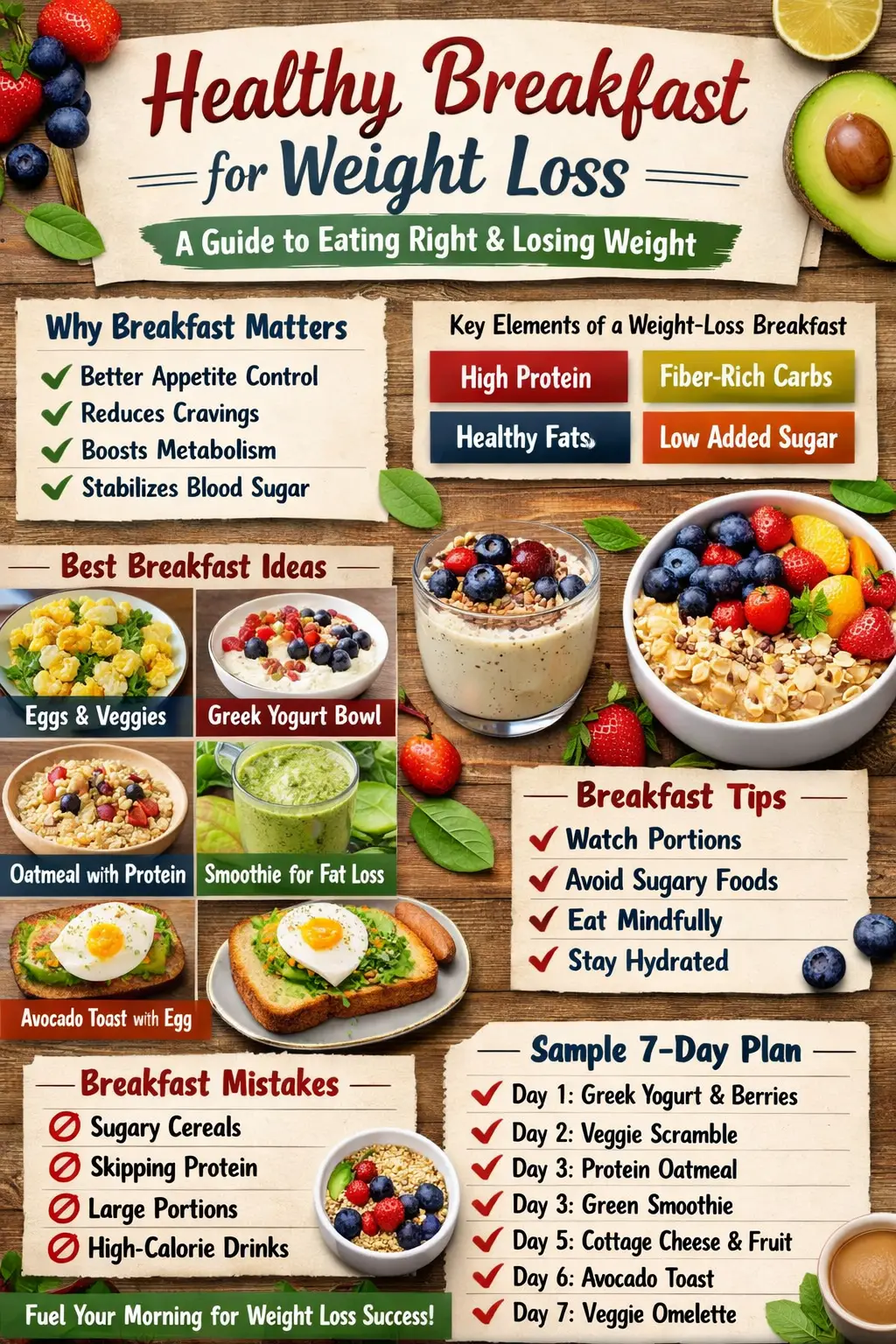
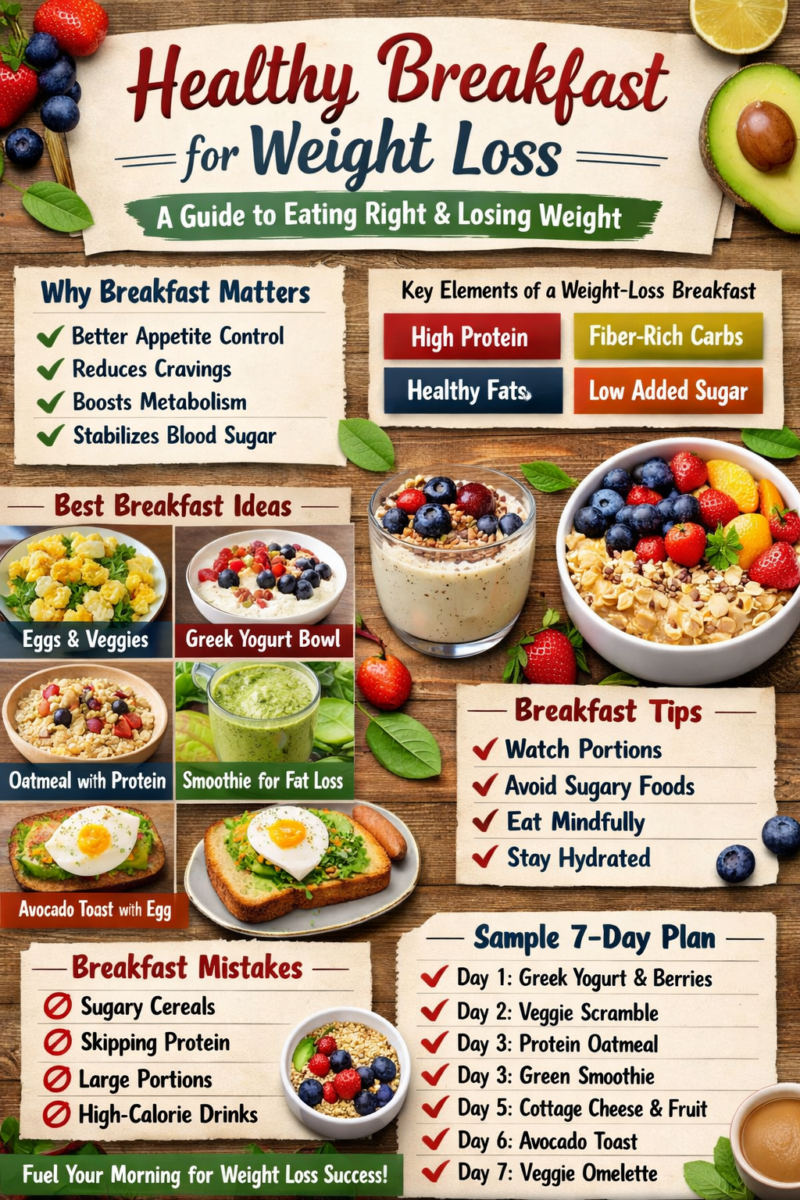
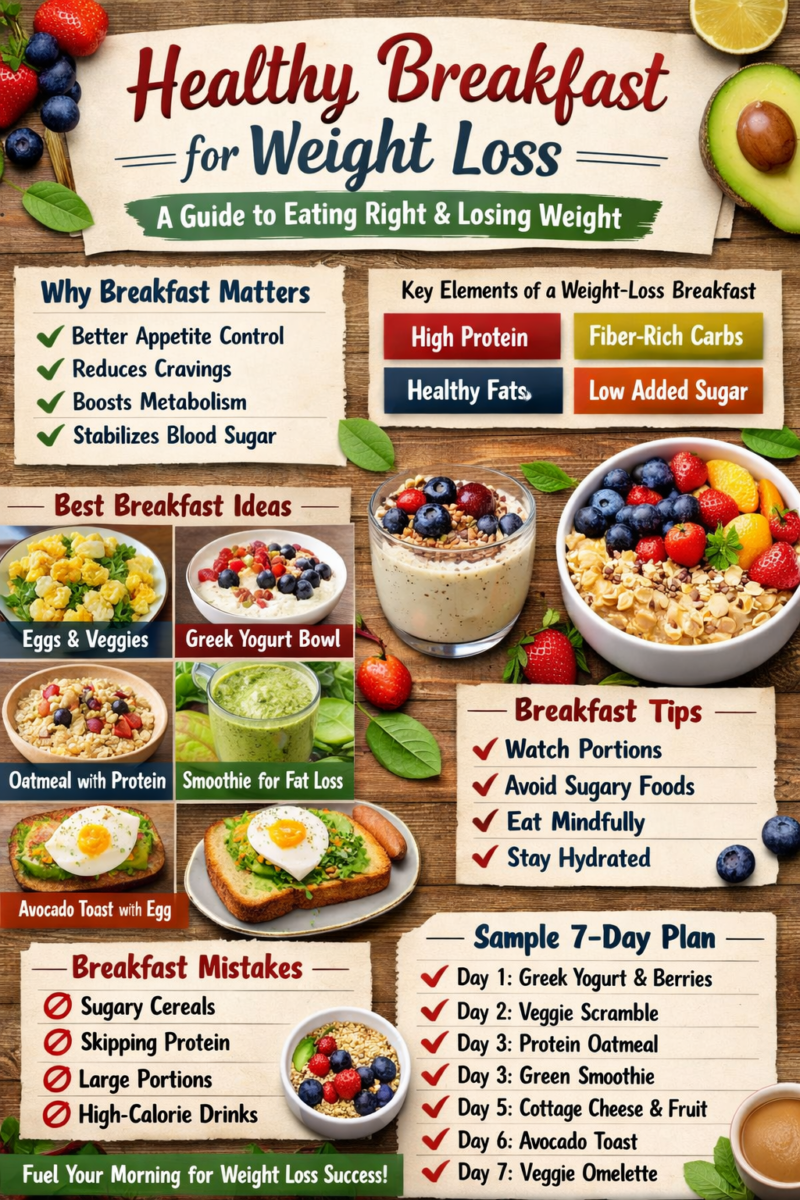
A healthy breakfast for weight loss plays an important role in managing hunger and improving metabolism
Why Breakfast Matters for Weight Loss
There is ongoing debate about whether breakfast is necessary for everyone. However, research consistently shows that people who eat a balanced breakfast tend to:
Choosing a healthy breakfast for weight loss helps reduce cravings throughout the day.
- Have better appetite control
- Experience fewer cravings later in the day
- Make healthier food choices overall
- Maintain steadier blood sugar levels
- Have improved metabolism regulation
When you wake up, your body has been fasting for 7–9 hours. Breakfast “breaks the fast,” replenishes glucose stores, and provides the energy your body needs to function properly. Without it, your body may experience drops in blood sugar, leading to fatigue, irritability, and intense hunger later.
For weight loss, the goal is not just to eat breakfast — but to eat the right kind of breakfast.
The Key Principles of a Healthy Weight-Loss Breakfast
A weight-loss-friendly breakfast should include the following elements:
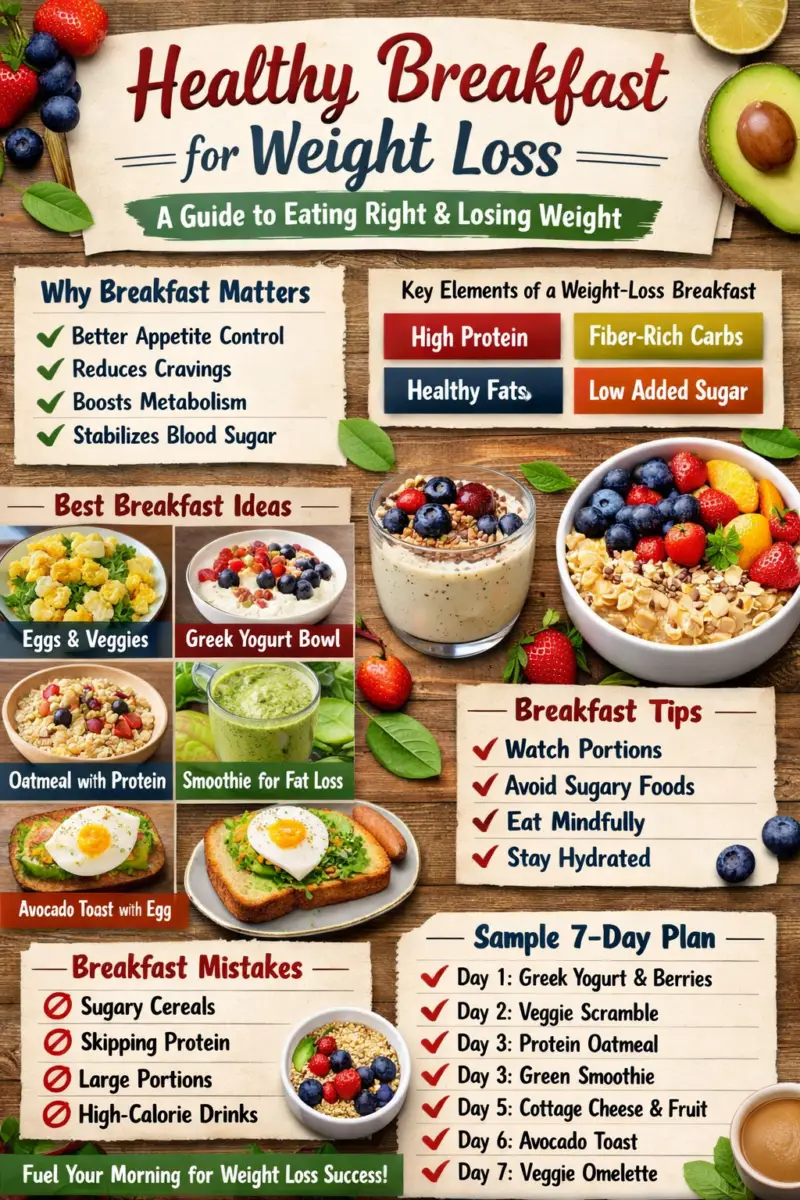
These are great options for a healthy breakfast for weight loss.
1. High Protein
Protein is one of the most important nutrients for weight loss. It:
- Reduces hunger hormones
- Increases feelings of fullness
- Boosts metabolism through the thermic effect of food
- Helps preserve lean muscle mass
Studies show that eating 20–30 grams of protein at breakfast can significantly reduce appetite and calorie intake throughout the day.
Good protein sources:
- Eggs
- Greek yogurt
- Cottage cheese
- Protein smoothies
- Tofu
- Lean turkey
- Nuts and seeds
2. Fiber-Rich Carbohydrates
Not all carbohydrates are equal. Refined carbs like white bread, sugary cereals, and pastries spike blood sugar and cause crashes later. Instead, choose high-fiber carbs, which:
- Slow digestion
- Improve satiety
- Support gut health
- Prevent blood sugar spikes
Good fiber sources:
- Oats
- Whole grain bread
- Chia seeds
- Flaxseeds
- Fruits (berries, apples, pears)
- Vegetables
3. Healthy Fats
Healthy fats are calorie-dense but very satisfying. They help control hunger and support hormone balance.
Healthy fat options:
- Avocado
- Nuts
- Seeds
- Nut butter (in moderation)
- Olive oil
When combined with protein and fiber, healthy fats create a balanced meal that keeps you full for hours.
4. Low Added Sugar
Many “breakfast foods” are actually desserts in disguise — sugary cereals, flavored yogurts, muffins, pancakes, and juice drinks. These can contain more sugar than soda.
Excess sugar leads to:
- Increased fat storage
- Energy crashes
- Cravings
- Insulin spikes
For weight loss, aim to minimize added sugars and rely on natural sweetness from whole fruits.
Best Healthy Breakfast Ideas for Weight Loss
Now let’s look at practical, nutritious breakfast ideas that support fat loss while keeping you satisfied.
1. Eggs and Vegetables
Eggs are one of the best breakfast foods for weight loss. They are high in protein and healthy fats, and very filling.
Example meal:
- 2–3 scrambled or boiled eggs
- Spinach, tomatoes, mushrooms, or peppers
- 1 slice whole-grain toast (optional)
This combination provides protein, fiber, and essential nutrients with relatively low calories.
2. Greek Yogurt Bowl
Greek yogurt is packed with protein and probiotics, which support digestion.
Healthy yogurt bowl:
- 1 cup plain Greek yogurt
- Handful of berries
- 1 tablespoon chia seeds or flaxseeds
- A few almonds or walnuts
Avoid flavored yogurts with added sugar. Sweeten naturally with fruit if needed.
3. Oatmeal with Protein Boost
Oats are high in soluble fiber, especially beta-glucan, which helps control hunger.
To make oatmeal more weight-loss friendly, add protein.
Example:
- ½ cup rolled oats
- Cook with water or unsweetened almond milk
- Add a scoop of protein powder or a spoon of peanut butter
- Top with berries and cinnamon
This combination balances carbs, protein, and healthy fats.
4. Smoothie for Fat Loss
Smoothies can be excellent for weight loss — or calorie bombs — depending on ingredients.
Weight-loss smoothie formula:
- 1 scoop protein powder
- 1 cup unsweetened almond milk
- Handful of spinach
- ½ banana
- 1 tablespoon chia seeds
- Ice
Avoid fruit-only smoothies or those with added syrups and sweetened juices.
5. Avocado Toast with Protein
Avocado provides healthy fats and fiber. Pair it with protein to make it balanced.
Example:
- 1 slice whole-grain bread
- Mashed avocado
- 1 poached egg or smoked salmon
- Sprinkle of seeds
This keeps you satisfied and helps avoid mid-morning snacking.
6. Cottage Cheese and Fruit
Cottage cheese is high in casein protein, which digests slowly and keeps you full longer.
Simple bowl:
- 1 cup cottage cheese
- Sliced apple or berries
- Sprinkle of cinnamon
- Few nuts for crunch
It’s low in calories but high in protein.
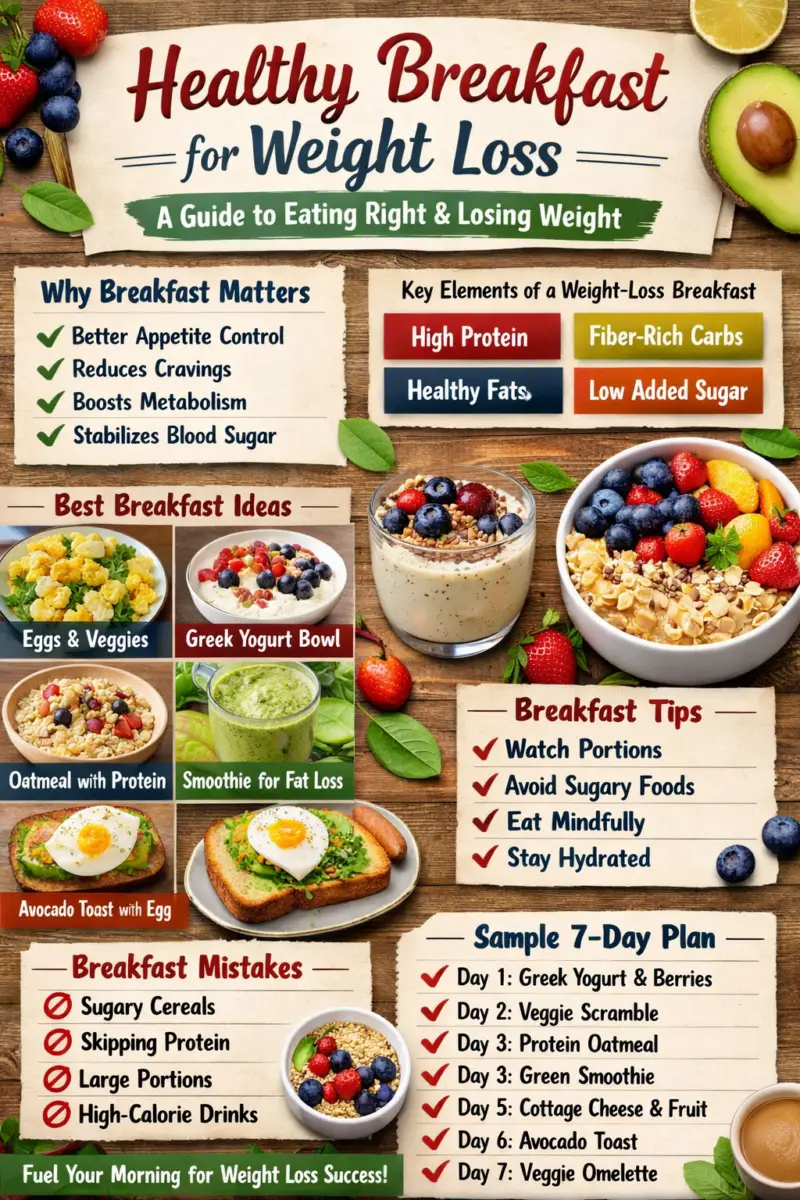
HealthBreakfast Habits That Support Weight Loss
Beyond food choices, habits matter too.
1. Don’t Overeat “Healthy” Foods
Even healthy foods contain calories. Portion control is still important. Nuts, avocado, and nut butter are nutritious but calorie-dense.
2. Avoid Liquid Calories
Fruit juices, sweetened coffee drinks, and smoothies with added sugar can sabotage weight loss.
Stick to:
- Black coffee
- Green tea
- Water
- Herbal tea
3. Eat Mindfully
Avoid eating while scrolling your phone or watching TV. Mindful eating helps prevent overeating and improves satisfaction.
4. Listen to Your Hunger
Some people genuinely aren’t hungry in the morning. If you’re not hungry, don’t force a large meal. A light, protein-based option can be sufficient.
Weight loss works best when you respect your body’s signals.
Common Breakfast Mistakes That Slow Weight Loss
1. Sugary Cereals
Even cereals labeled “healthy” may contain large amounts of sugar.
2. Skipping Protein
A carb-heavy breakfast leads to hunger soon after.
3. Large Portion Sizes
Oversized smoothie bowls and “healthy” pancakes can exceed daily calorie needs.
4. Drinking Your Calories
High-calorie coffee drinks can add 300–500 calories without filling you up.
How Many Calories Should Breakfast Have?
There is no universal number, but a good rule of thumb is:
- 300–500 calories
- 20–30 grams of protein
- High fiber (5–10 grams)
Your needs depend on your body weight, activity level, and overall daily calorie target.
Can Skipping Breakfast Help with Weight Loss?
Some people practice intermittent fasting, which involves delaying the first meal. This can work for certain individuals if it helps reduce total calorie intake.
However:
- It’s not necessary for weight loss.
- It may increase overeating later for some people.
- It’s not ideal for everyone, especially those with blood sugar issues.
The key to weight loss is total daily calorie balance and food quality — not just whether you eat breakfast.
Sample 7-Day Healthy Breakfast Plan for Weight Loss
Day 1: Greek yogurt, berries, chia seeds
Day 2: Scrambled eggs with vegetables
Day 3: Oatmeal with protein powder and almond butter
Day 4: Smoothie with spinach, protein, and banana
Day 5: Cottage cheese with apple slices and walnuts
Day 6: Avocado toast with poached egg
Day 7: Vegetable omelet with side of fruit
This variety ensures balanced nutrition and prevents boredom.
Final Thoughts: Build a Sustainable Routine
Healthy weight loss is not about extreme dieting or skipping meals. It’s about building habits that you can maintain long term.
A balanced breakfast that includes protein, fiber, and healthy fats can:
- Reduce cravings
- Support metabolism
- Improve energy
- Help maintain lean muscle
- Prevent overeating
The most effective breakfast is one that fits your lifestyle, tastes good, and keeps you satisfied until your next meal.
Remember, consistency matters more than perfection. Choose whole foods, focus on balance, control portions, and stay mindful of your hunger cues. Over time, these small daily choices can lead to lasting results.
Start tomorrow morning with intention — and let your breakfast work for you, not against you.
Healthy Breakfast for Weight Loss: A Complete Guide to Starting Your Day Right
When it comes to weight loss, breakfast is often called the “most important meal of the day” — and for good reason. A well-balanced, nutritious breakfast can set the tone for your metabolism, energy levels, hunger control, and food choices for the rest of the day. On the other hand, skipping breakfast or choosing high-sugar, low-nutrient foods can lead to cravings, overeating, and stalled progress.
If your goal is to lose weight in a healthy and sustainable way, understanding what to eat for breakfast — and why — is essential. In this comprehensive guide, we’ll explore the science behind breakfast and weight loss, key nutrients to focus on, and practical meal ideas you can easily include in your daily routine.
Why Breakfast Matters for Weight Loss
There is ongoing debate about whether breakfast is necessary for everyone. However, research consistently shows that people who eat a balanced breakfast tend to:
- Have better appetite control
- Experience fewer cravings later in the day
- Make healthier food choices overall
- Maintain steadier blood sugar levels
- Have improved metabolism regulation
When you wake up, your body has been fasting for 7–9 hours. Breakfast “breaks the fast,” replenishes glucose stores, and provides the energy your body needs to function properly. Without it, your body may experience drops in blood sugar, leading to fatigue, irritability, and intense hunger later.
For weight loss, the goal is not just to eat breakfast — but to eat the right kind of breakfast.
The Key Principles of a Healthy Weight-Loss Breakfast
A weight-loss-friendly breakfast should include the following elements:
1. High Protein
Protein is one of the most important nutrients for weight loss. It:
- Reduces hunger hormones
- Increases feelings of fullness
- Boosts metabolism through the thermic effect of food
- Helps preserve lean muscle mass
Studies show that eating 20–30 grams of protein at breakfast can significantly reduce appetite and calorie intake throughout the day.
Good protein sources:
- Eggs
- Greek yogurt
- Cottage cheese
- Protein smoothies
- Tofu
- Lean turkey
- Nuts and seeds
2. Fiber-Rich Carbohydrates
Not all carbohydrates are equal. Refined carbs like white bread, sugary cereals, and pastries spike blood sugar and cause crashes later. Instead, choose high-fiber carbs, which:
- Slow digestion
- Improve satiety
- Support gut health
- Prevent blood sugar spikes
Good fiber sources:
- Oats
- Whole grain bread
- Chia seeds
- Flaxseeds
- Fruits (berries, apples, pears)
- Vegetables
3. Healthy Fats
Healthy fats are calorie-dense but very satisfying. They help control hunger and support hormone balance.
Healthy fat options:
- Avocado
- Nuts
- Seeds
- Nut butter (in moderation)
- Olive oil
When combined with protein and fiber, healthy fats create a balanced meal that keeps you full for hours.
4. Low Added Sugar
Many “breakfast foods” are actually desserts in disguise — sugary cereals, flavored yogurts, muffins, pancakes, and juice drinks. These can contain more sugar than soda.
Excess sugar leads to:
- Increased fat storage
- Energy crashes
- Cravings
- Insulin spikes
For weight loss, aim to minimize added sugars and rely on natural sweetness from whole fruits.
Best Healthy Breakfast Ideas for Weight Loss
Now let’s look at practical, nutritious breakfast ideas that support fat loss while keeping you satisfied.
1. Eggs and Vegetables
Eggs are one of the best breakfast foods for weight loss. They are high in protein and healthy fats, and very filling.
Example meal:
- 2–3 scrambled or boiled eggs
- Spinach, tomatoes, mushrooms, or peppers
- 1 slice whole-grain toast (optional)
This combination provides protein, fiber, and essential nutrients with relatively low calories.
2. Greek Yogurt Bowl
Greek yogurt is packed with protein and probiotics, which support digestion.
Healthy yogurt bowl:
- 1 cup plain Greek yogurt
- Handful of berries
- 1 tablespoon chia seeds or flaxseeds
- A few almonds or walnuts
Avoid flavored yogurts with added sugar. Sweeten naturally with fruit if needed.
3. Oatmeal with Protein Boost
Oats are high in soluble fiber, especially beta-glucan, which helps control hunger.
To make oatmeal more weight-loss friendly, add protein.
Example:
- ½ cup rolled oats
- Cook with water or unsweetened almond milk
- Add a scoop of protein powder or a spoon of peanut butter
- Top with berries and cinnamon
This combination balances carbs, protein, and healthy fats.
4. Smoothie for Fat Loss
Smoothies can be excellent for weight loss — or calorie bombs — depending on ingredients.
Weight-loss smoothie formula:
- 1 scoop protein powder
- 1 cup unsweetened almond milk
- Handful of spinach
- ½ banana
- 1 tablespoon chia seeds
- Ice
Avoid fruit-only smoothies or those with added syrups and sweetened juices.
5. Avocado Toast with Protein
Avocado provides healthy fats and fiber. Pair it with protein to make it balanced.
Example:
- 1 slice whole-grain bread
- Mashed avocado
- 1 poached egg or smoked salmon
- Sprinkle of seeds
This keeps you satisfied and helps avoid mid-morning snacking.
6. Cottage Cheese and Fruit
Cottage cheese is high in casein protein, which digests slowly and keeps you full longer.
Simple bowl:
- 1 cup cottage cheese
- Sliced apple or berries
- Sprinkle of cinnamon
- Few nuts for crunch
It’s low in calories but high in protein.
Breakfast Habits That Support Weight Loss
Beyond food choices, habits matter too.
1. Don’t Overeat “Healthy” Foods
Even healthy foods contain calories. Portion control is still important. Nuts, avocado, and nut butter are nutritious but calorie-dense.
2. Avoid Liquid Calories
Fruit juices, sweetened coffee drinks, and smoothies with added sugar can sabotage weight loss.
Stick to:
- Black coffee
- Green tea
- Water
- Herbal tea
3. Eat Mindfully
Avoid eating while scrolling your phone or watching TV. Mindful eating helps prevent overeating and improves satisfaction.
4. Listen to Your Hunger
Some people genuinely aren’t hungry in the morning. If you’re not hungry, don’t force a large meal. A light, protein-based option can be sufficient.
Weight loss works best when you respect your body’s signals.
Common Breakfast Mistakes That Slow Weight Loss
1. Sugary Cereals
Even cereals labeled “healthy” may contain large amounts of sugar.
2. Skipping Protein
A carb-heavy breakfast leads to hunger soon after.
3. Large Portion Sizes
Oversized smoothie bowls and “healthy” pancakes can exceed daily calorie needs.
4. Drinking Your Calories
High-calorie coffee drinks can add 300–500 calories without filling you up.
How Many Calories Should Breakfast Have?
There is no universal number, but a good rule of thumb is:
- 300–500 calories
- 20–30 grams of protein
- High fiber (5–10 grams)
Your needs depend on your body weight, activity level, and overall daily calorie target.
Can Skipping Breakfast Help with Weight Loss?
Some people practice intermittent fasting, which involves delaying the first meal. This can work for certain individuals if it helps reduce total calorie intake.
However:
- It’s not necessary for weight loss.
- It may increase overeating later for some people.
- It’s not ideal for everyone, especially those with blood sugar issues.
The key to weight loss is total daily calorie balance and food quality — not just whether you eat breakfast.
Sample 7-Day Healthy Breakfast Plan for Weight Loss
Day 1: Greek yogurt, berries, chia seeds
Day 2: Scrambled eggs with vegetables
Day 3: Oatmeal with protein powder and almond butter
Day 4: Smoothie with spinach, protein, and banana
Day 5: Cottage cheese with apple slices and walnuts
Day 6: Avocado toast with poached egg
Day 7: Vegetable omelet with side of fruit
This variety ensures balanced nutrition and prevents boredom.
Final Thoughts: Build a Sustainable Routine
Healthy weight loss is not about extreme dieting or skipping meals. It’s about building habits that you can maintain long term.
A balanced breakfast that includes protein, fiber, and healthy fats can:
- Reduce cravings
- Support metabolism
- Improve energy
- Help maintain lean muscle
- Prevent overeating
The most effective breakfast is one that fits your lifestyle, tastes good, and keeps you satisfied until your next meal.
Remember, consistency matters more than perfection. Choose whole foods, focus on balance, control portions, and stay mindful of your hunger cues. Over time, these small daily choices can lead to lasting results.
Start tomorrow morning with intention — and let your breakfast work for you, not against you.
Disclaimer:
This content is for general information only and does not replace medical advice. Please consult a healthcare professional for personal guidance.
Final Thought:
Small healthy habits practiced every day can lead to big improvements over time. Stay consistent, listen to your body, and choose progress over perfection.

Muhammad Yaqoob is the founder of Global786Trend.com and a passionate health and wellness blogger. He writes about weight loss, healthy lifestyle, diet tips, and fitness. His goal is to provide simple, research-based information to help people improve their daily health habits naturally.