How to Start Halal Investing with $100 Step by Step for Beginners 2026
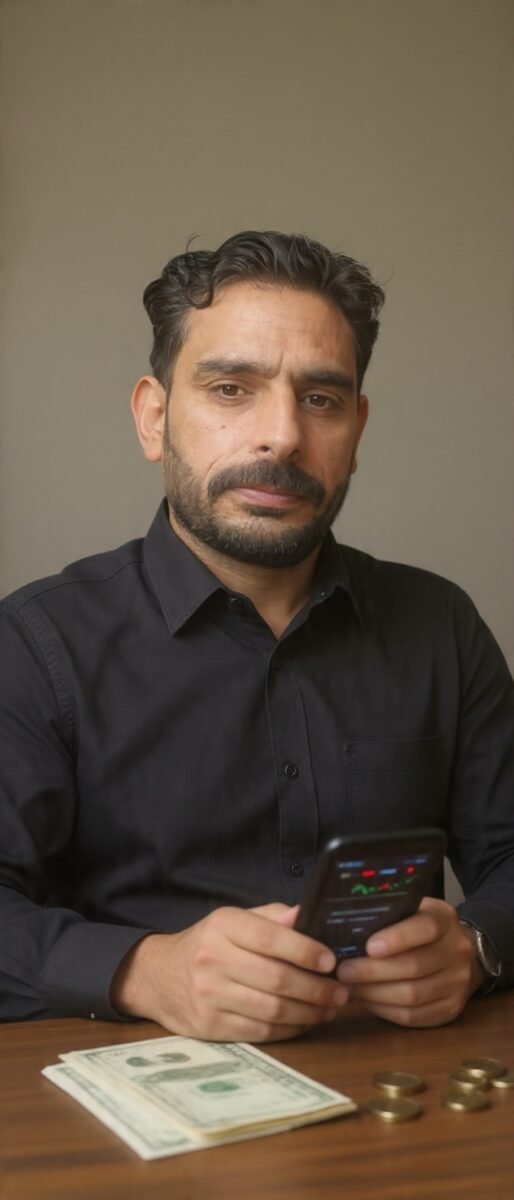
My $100 Story: It Started With Confusion, Not Cash
Three years ago, I had $100 in my pocket. That’s it. No savings, no stock knowledge, just a 9-to-5 job in Lahore and a phone full of YouTube videos I didn’t understand.
Every time I heard the word “investing”, people talked like you need $10,000 minimum. I kept asking myself: can a normal guy like me even do halal investing with 100 dollars? Or is this only for rich people?
Spoiler: I messed up first. A friend told me to buy a bank stock. Two weeks later I realized banks make money from interest. That’s riba. That’s haram. I lost $12 and felt worse about the sin than the money.
Then I started reading fatwas. Watching scholars. Testing small amounts. Slowly, things clicked.
Alhamdulillah, that same $100 is now worth $850+. Not because I’m some trading genius. Because I followed a simple, step by step process for halal investing with 100 dollars.
And 2026? It’s easier now. Zero fees. Fractional shares. Free halal screening tools. If you’ve got $100 and the intention to keep it halal, this guide is for you. No jargon. No fluff. Just what actually works.
Chapter 1: What dos halal investing with 100 dollars
Before we talk about how to do halal investing with 100 dollars, let’s clear the basics. “Halal” doesn’t mean the company just put “Islamic” in its name.
Scholars and apps like Zoya + Islamicly use 3 rules in 2026:
1. The Business Itself Must Be Halal
If a company makes most of its money from alcohol, gambling, pork, weapons, adult content, or interest-based banking, it’s out.
Coca-Cola? Okay. Budweiser? Nope. Hospital? Yes. Casino? No.
2. The Debt Can’t Be Too High
Even if the business is halal, the finances matter. If a company’s debt is more than 33% of its market value, most scholars say it’s not halal. Why? Because a company buried in interest-based loans is too deep in riba.
3. Impure Income Must Be Under 5%
No company is 100% perfect. Apple might earn 1-2% from interest on its cash. That’s okay if it’s under 5%. Scholars say you give that small amount to charity as “purification”.
So when you do halal investing with 100 dollars, you’re not just buying a ticker. You’re becoming a part-owner of a business. Make sure it’s a business you’d be proud of on Judgment Day.
Chapter 2: Step 1 – Pick a Broker That Won’t Eat Your $100
Your first $100 is small. If your broker charges $5 per trade, you lose 5% before you even start. That’s dumb.
For halal investing with 100 dollars, you need zero-commission brokers:
1. Interactive Brokers IBKR – My #1 Pick
Why? Fractional shares from $1. So if Amazon is $180, you can still buy $10 worth. Works for Pakistan, India, UAE, Bangladesh, almost everywhere. Account opens online in 10 minutes.
2. Webull – Best for Beginners
Super clean app. They often give 1-3 free stocks when you deposit $100. That’s instant 10-30% return. Plus Zoya is now built inside, so you can check halal status without leaving the app.
3. M1 Finance – For Lazy Investors
Build a “Pie” of stocks/ETFs once, and M1 invests your money automatically every month. Set it and forget it. Perfect for halal investing with 100 dollars if you don’t want to think daily.
What You Need to Sign Up:
Passport or CNIC, a selfie, and bank details. Non-US people fill a W-8BEN form. It’s 1 page and lowers your US dividend tax. Easy.
Important: Always choose “Cash Account”, not “Margin Account”. Margin = borrowing money from the broker with interest. That’s riba. Haram.
3: Step 2 – How to Find Halal Stocks With Just $100
You can’t buy 20 stocks with $100. You need to be smart. Here are 3 options for halal investing with 100 dollars:
Option A: Use a Screening Tool, Not Guesswork
Stop guessing if a stock is halal. Check it:
- Zoya.app – Type “Tesla” or “Apple”. It shows Green = Halal, Red = Not Halal. Also shows debt ratio + impure income.
- Islamicly.app – Same thing, plus a list of 2000+ pre-screened halal stocks.
Rule: Check ANY stock here before you buy. Takes 5 seconds. Halal investing with 100 dollars starts with this step.
Option B: Buy a Halal ETF Instead of One Stock
An ETF is a basket of 100+ companies. Buy one ETF, own a piece of Apple, Microsoft, Nvidia, etc. Way safer than one stock.
Best Halal ETFs for $100 in 2026:
- SPUS – SP Funds S&P 500 Shariah ETF
Tracks the S&P 500 but only halal companies. Expense ratio 0.49%. One share is $70-$80 in 2026, so your $100 buys 1 share easily. - HLAL – Wahed FTSE USA Shariah ETF
Made by Wahed Invest. Top US Shariah-compliant companies. Great for long-term halal investing with 100 dollars. - AMZP – Amana Participation ETF
More tech-focused. Higher risk, higher reward.
Confused? Just buy SPUS. It’s the safest start for halal investing with 100 dollars.
Option C: Use Fractional Shares
Game changer. Old days: Apple at $190 = need $190. 2026: IBKR lets you buy $10 of Apple. So with $100, you can own 8-10 companies. That’s diversification, and it cuts your risk.
4: Step 3 – 3 Simple $100 Portfolios You Can Copy
I tested these 3 with real $100. Pick what fits you:
Portfolio 1: “Sleep Well” – 100% SPUS
$100 → SPUS ETF
Risk: Low
Why: You own 200+ halal companies. If Apple drops, Microsoft balances it. Simplest way to start halal investing with 100 dollars.
Expected return: 8-10% per year. $100 → $215 in 10 years.
Portfolio 2: “Balanced” – 70% ETF + 30% Growth Stock
$70 → SPUS, $30 → Microsoft MSFT
Risk: Medium
Why: Safety of ETF + growth of a strong company. Microsoft is debt-free and 100% halal in 2026. Leader in AI + cloud.
My personal favorite for halal investing with 100 dollars. Not boring, not reckless.
Portfolio 3: “Growth” – 3 Tech Stocks
$35 → Apple AAPL, $35 → Nvidia NVDA, $30 → Amazon AMZN
Risk: High
Why: All halal, all leaders in AI 2026. But tech jumps up and down a lot. Only pick this if you can hold 5+ years without panicking.
Highest risk version of halal investing with 100 dollars, but also highest potential reward.
Rule: Don’t dump all $100 into one random TikTok stock. That’s gambling, not investing.
Chapter 5: Step 4 – How to Actually Buy Without Panic
Account open, money deposited. Now what? Deep breath. It’s simple:
- Open broker app → Search ticker “SPUS”
- Tap “Buy”
- Two options:
- Market Order = Buy now at current price. Best for beginners doing halal investing with 100 dollars.
- Limit Order = “Buy only if price drops to $75”. Might take days.
- Type “$100” or “1 share”
- Tap “Review” → “Submit”
Done. You’re now an investor. You own real companies.
Don’t check the price every 5 minutes. Stocks move daily. For halal investing with 100 dollars, think in years, not hours.
Chapter 6: Step 5 – The Real Secret: Dollar Cost Averaging
Truth bomb: $100 won’t make you rich. $100 every month will.
This is called Dollar Cost Averaging, DCA. You invest the same small amount monthly, no matter the price.
Example for halal investing with 100 dollars:
Month 1: SPUS is $80 → $15 buys 0.1875 shares
Month 2: SPUS crashes to $70 → $15 buys 0.214 shares. More for your money!
Month 3: SPUS is $90 → $15 buys 0.166 shares
Over time, you buy more when prices are low, less when high. Average cost drops. Stress gone.
Set auto-deposit. $15 from your bank → broker → SPUS every payday. After 2 years, halal investing with 100 dollars becomes $460 invested, plus growth.
Chapter 7: 5 Mistakes That Killed My $100 Portfolio
I lost money so you don’t have to. Avoid these:
Mistake 1: Skipping the Halal Check
I bought Tesla in 2022. +40% gain. Happy. Then Zoya showed debt ratio 35% > 33% limit. Had to sell at loss and give profit to charity. Lesson: Halal investing with 100 dollars means halal first, profit second.
Mistake 2: Day Trading $100
Buying/selling 5x daily = fees + taxes + no sleep + losses. $100 is not for day trading. It’s for long-term halal investing with 100 dollars.
Mistake 3: Panic Selling in Crashes
March 2026, market dropped 15% in a week. Beginners sold everything. Smart investors bought more. If you believe in the companies, crashes are discount sales.
Mistake 4: Forgetting Zakat
If your portfolio stays above nisab for 1 Islamic year, pay 2.5% zakat. Portfolio $400 → Zakat $10. Purifies wealth and adds barakah to halal investing with 100 dollars.
Mistake 5: Comparing to Crypto Guys
Don’t feel bad if someone turned $100 → $10,000 with crypto. They took crazy risks. Your goal with halal investing with 100 dollars is slow, steady, haram-free growth.
Chapter 8: Taxes, Dividends & Zakat in 2026
Dividends: Microsoft pays cash every 3 months for holding the stock. US takes 15% tax from non-US citizens. $1 dividend → you get $0.85. Halal.
Capital Gains Tax: Sell stock for profit, your country may tax it. Pakistan: no tax currently on foreign stocks for small investors. India: 10% tax on long-term gains above ₹1 lakh. Check your local rules.
Zakat Formula: On your Islamic year date, check portfolio value × 0.025. $400 × 0.025 = $10 zakat. Give to poor.
Responsible halal investing with 100 dollars includes this.
Chapter 9: FAQs for 2026 Beginners
Q: Can $100 make me a millionaire?
A: Be real. $100 at 10% for 10 years = $259. For 20 years = $672. The magic is adding money monthly. $100 + $50/month = $23,000 in 20 years. Slow + halal wins.
Q: Is Bitcoin halal?
A: Scholars still debate it in 2026. Many say Bitcoin = digital gold, so halal to own. But it’s super risky. For your first $100, stick to halal stocks + ETFs. Learn basics before crypto.
Q: Can Pakistan/India people open US broker accounts?
A: Yes, 100% legal. Millions do it. IBKR accepts international clients. You pay tax in your own country if required.
Q: What if I lose all $100?
A: If you buy SPUS or diversified ETFs, losing 100% is unlikely. The whole US economy would need to collapse. Single stocks can go to zero, so diversification matters for halal investing with 100 dollars.
Q: When will I see profit?
A: Some months up, some down. Think 5 years minimum. Investing is a marathon.
Final Words: Your $100 is About Mindset
When I bought my first $10 of SPUS, I didn’t get rich. But my mindset changed. I stopped being just a “salary guy” and became an “owner”. Started thinking like a business owner.
That shift is worth more than the $100.
Halal investing with 100 dollars in 2026 is easier than ever. Zero fees, fractional shares, free screening tools. The only thing missing is your first step.
Open the app today. Deposit $100. Buy 1 share of SPUS. Forget it for 6 months.
One year from now, you’ll thank yourself. InshaAllah, your small halal investment will support your family and bring you closer to Allah because it’s free from riba.
Want me to check if a company is halal? Comment the name below. I’ll check Zoya for you.
Disclaimer –
This article is for educational purposes only. I am not a financial advisor. Investing involves risk. $100 returns will be small. Always do your own research and consult a qualified advisor before investing.Ab article + aapki photo wali images + ye Q&A + slug sab set hai.
Trusted Resources & References
To keep this guide accurate, I referenced these official sources:
- AAOIFI Shariah standards for Islamic finance contracts
- Check if a stock is Shariah compliant using Zoya
- HLAL Shariah compliant ETF holdings and methodology
- SEC guide for beginner investors
1. Is Islamic finance only about avoiding interest?
No. Avoiding riba is one part, but Islamic finance is also based on risk-sharing, asset-backing, and ethical screening. A deal must involve real assets and shared risk, not just remove the word “interest”.
2. Can non-Muslims use Islamic finance products?
Yes. Many non-Muslim investors use sukuk, halal ETFs, and Islamic bank accounts because they prefer low debt, asset-backed, and ethical investing. There’s no religious requirement to use them.
3. Are returns in Islamic finance lower than conventional finance?
Not necessarily. Shariah indices like S&P 500 Shariah have matched or even outperformed conventional indices over long periods. Returns depend on market performance, not on whether the fund is Shariah compliant.
4. How do I know if an Islamic bank is really Shariah compliant?
Look for 3 things: 1) A board of independent Shariah scholars, 2) Annual Shariah audit reports, 3) Certification from AAOIFI or a recognized body. If a product feels like a loan with no real asset, ask questions.
5. Can I get a home mortgage that’s Shariah compliant?
Yes. Instead of interest-based loans, Islamic banks use contracts like Murabaha, Maharajah, or Musharraf. In Musharraf, you and the bank co-own the house and you gradually buy the bank’s share.
6. Are stocks halal to invest in?
Yes, if the company’s business and finances pass Shariah screening. Stocks of companies in alcohol, gambling, weapons, or heavy debt are avoided. You can check stocks using apps like Zoya or buy pre-screened halal ETFs.
7. Is crypto allowed in Islamic finance?
Scholars differ. Bitcoin is considered halal by some and doubtful by others. Staking, interest-based DeFi, and most stable coins are usually not compliant. Only invest after checking a fatwa from a trusted Shariah board.
8. Do I need to “purify” my investment returns?
If you invest in Shariah screened stocks or ETFs, a tiny portion of income may come from interest or haram sources. Most funds publish an annual purification amount. You donate that amount to charity without seeking reward.

of sharing practical knowledge so you can invest confidently while staying true to your values. Always verify with a Shariah advisor before investing._